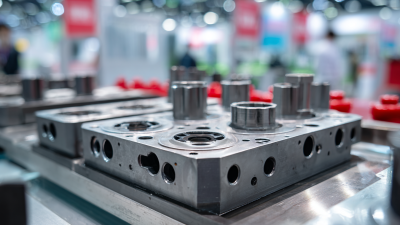
In the growing field of "Injection Molding Automotive," manufacturers are increasingly recognizing its significance. Injection molding has transformed production methods in the automotive industry. A report by MarketsandMarkets revealed that the global automotive injection molding market is projected to reach $14.09 billion by 2025. This impressive growth emphasizes the need for innovative manufacturing techniques to meet rising consumer demand.
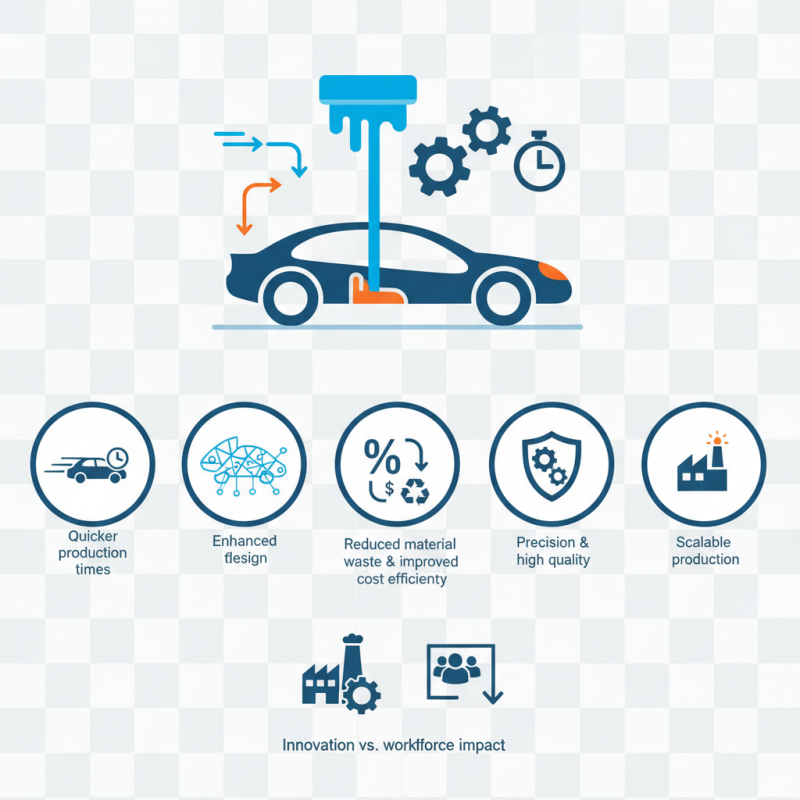
Expert Martin Reynolds, a leader in automotive manufacturing solutions, stated, "Injection molding allows for quicker production times and enhanced design flexibility." His insight highlights the technology's pivotal role in product development. The precision of injection molding contributes to reducing material waste, thereby improving cost efficiency.
However, implementing this technology is not without challenges. Companies facing high initial investment costs need to weigh the long-term benefits. Additionally, an over-reliance on automation can lead to potential job losses in traditional manufacturing roles. As the industry evolves, striking a balance between innovation and workforce impact remains essential.
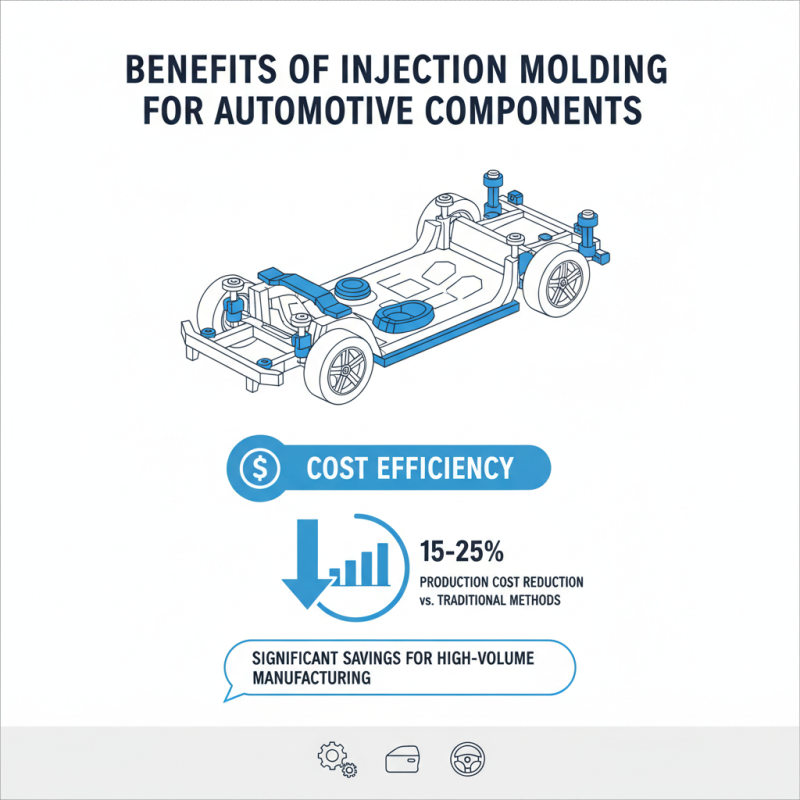
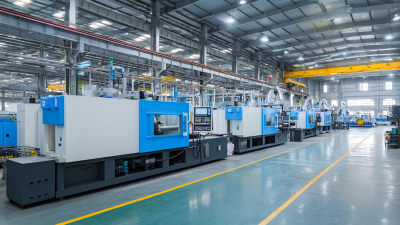
Injection molding is vital in the automotive sector, offering numerous advantages for producing components. One major benefit is cost efficiency. According to industry reports, injection molding reduces production costs by 15-25% compared to traditional methods. This reduction is significant in high-volume production, where even a small cost per unit can translate into substantial savings.
Another key advantage is design flexibility. Injection molding allows for intricate designs and complex geometries that are often difficult to achieve with other manufacturing methods. Automotive components can be produced with intricate details, enhancing both function and aesthetics. However, the initial design and mold costs can be high, requiring careful planning and consideration.
Quality and precision are also notable benefits. Injection molding provides tight tolerances, which are crucial in automotive applications. Reports indicate that variations can be as low as 0.01 mm. This accuracy can lead to better-performing components, yet, imperfections in the molding process can result in quality issues. Thus, constant monitoring and improvement are necessary for optimal results.
Injection molding is transforming the automotive industry, offering greater design flexibility. This technique allows manufacturers to create complex shapes that were once impossible. Customized parts, including intricate dashboards and bumpers, can now be produced with precision. The ability to mold multiple components into a single piece reduces assembly time and potential errors.
Designers can experiment with various materials and colors, elevating aesthetics and performance. Lightweight composites can improve fuel efficiency. Yet, this process is not without challenges. Initial setup costs can be high, and design adjustments may require retooling. A miscalculation can lead to waste, so careful planning is essential. Balancing creativity with practical engineering remains an ongoing challenge.
Overall, injection molding opens new doors in vehicle manufacturing. As the technology evolves, its role in creating more efficient and stylish vehicles will only grow. This flexible method plays a crucial role in the automotive sector's future, but continuous improvement is needed to maximize its potential.
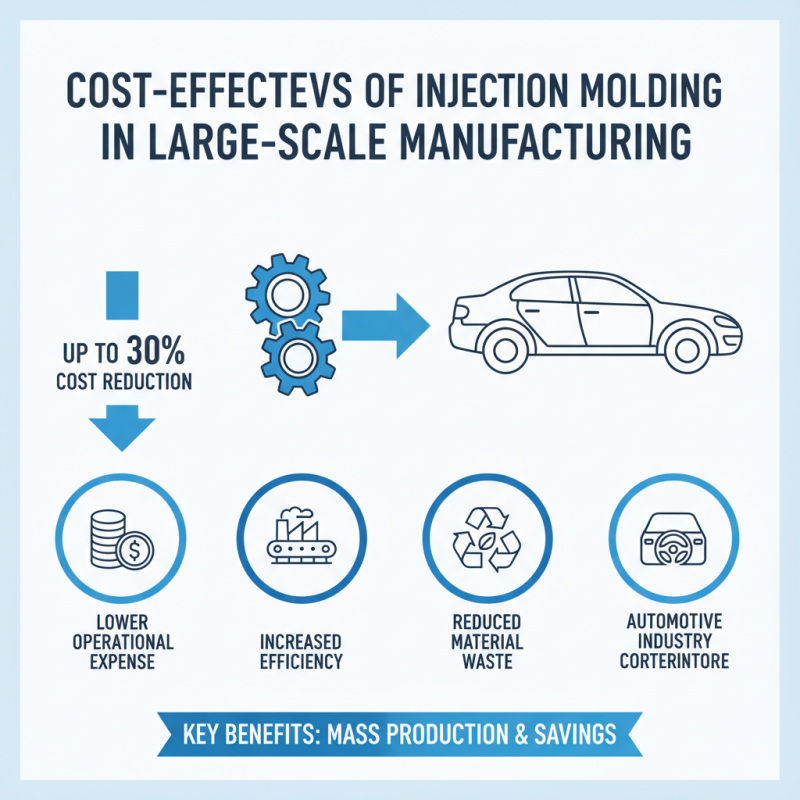
Injection molding has become a cornerstone in the automotive industry, primarily due to its cost-effectiveness in large-scale manufacturing. A recent industry report indicates that injection molding can reduce production costs by up to 30% compared to traditional manufacturing methods. This significant saving arises from the efficiency of mass production and reduced material waste, which lowers the overall operational expense.
The process allows manufacturers to create complex parts with intricate designs. Automakers can produce lightweight components that meet stringent safety and performance standards. However, the initial investment in machinery and tooling can be high. This creates a barrier for smaller companies looking to enter the market. Nonetheless, the long-term financial benefits often outweigh these concerns.
Furthermore, the speed of injection molding is impressive. Parts can be produced in seconds, which is vital in the fast-paced automotive sector. With production rates reaching thousands of units per hour, manufacturers can quickly respond to market demands. Yet, they must consider the balance between quality and speed. Increasing output may sometimes compromise detail, leading to defects. Careful monitoring and adjustments are necessary for maintaining high standards while enjoying the benefits of this efficient manufacturing process.
Injection molding revolutionizes the automotive industry by enhancing product quality and consistency. This manufacturing technique allows for precise control over the dimensions of automotive parts. High-quality molds ensure that each part meets strict specifications. This reduces the risk of defects and the costs associated with rework or replacements.
The consistency achieved through injection molding is impressive. Each component produced is nearly identical, minimizing variability in performance. Automakers rely on this predictability to maintain high standards. However, it is not infallible. Variations in material or temperature can lead to issues. Thus, constant monitoring and adjustments are necessary to maintain quality.
Collaboration between engineers and production staff is vital. Cross-functional teams can identify potential problems early. They ensure that any flaws are addressed before reaching the consumer. Despite best efforts, there are always lessons to be learned from each production cycle. Continuous improvement is part of the process in striving for excellence.
Injection molding is revolutionizing the automotive industry. This process not only enhances product design but also prioritizes sustainability. The use of injection molding drastically reduces material waste. Industry reports highlight that this method can achieve up to 95% material efficiency when integrated with recycled plastics. Such efficiency is vital in reducing the carbon footprint of manufacturing.
The automotive sector is under pressure to meet sustainability goals. By utilizing injection molding, manufacturers can produce lightweight components that enhance fuel efficiency. For instance, lighter parts reduce overall vehicle weight, leading to better gas mileage. Furthermore, advanced technologies enable the use of bio-based materials, which contribute to a circular economy.
Tips: Always assess the environmental impact of materials used in injection molding. Consider alternatives to traditional plastics that may offer better recyclability. Engaging with suppliers who prioritize sustainable practices is essential.
Despite these advancements, there are challenges. The initial setup cost for energy-efficient molding machines can be high. Moreover, sourcing sustainable materials may not be straightforward. Companies must balance costs with sustainability goals. Maintaining efficiency should not compromise product quality or performance.
| Benefit | Description | Material Efficiency | Sustainability Impact |
|---|---|---|---|
| High Production Speed | Injection molding allows for rapid production of parts, enabling automotive manufacturers to scale up production quickly. | Minimizes waste by utilizing precise material injection. | Reduces energy consumption per unit produced, contributing to lower carbon footprint. |
| Design Flexibility | Allows complex geometries and increased design freedom for automotive components. | Optimizes the use of material, making complex designs feasible. | Encourages innovative designs that can enhance recyclability. |
| Reduced Waste | Minimizes scrap and excess material during production. | Utilizes near 100% of the injected material, maximizing efficiency. | Less waste translates to a smaller environmental impact. |
| Consistency and Quality | Delivers high precision and uniformity in manufactured parts. | Reduces the need for excess material due to tight tolerances. | Consistent quality enhances product lifespan, leading to reduced environmental impact. |
| Cost-Effectiveness | Lower cost per part with large production runs, enhancing profitability. | Efficiency reduces the overall material costs. | Sustainable practices can lead to reduced regulatory costs and bolster brand reputation. |