Choosing a reliable partner for Custom Plastic Injection Molding is rarely as simple as comparing prices. Material selection, mold design, cycle control, tolerances, and delivery consistency can shape the final result.
This guide examines ten leading companies that serve different manufacturing needs. Some specialize in medical components, while others support automotive, electronics, packaging, or industrial parts. Their capabilities may include rapid prototyping, complex tooling, insert molding, overmolding, and high-volume production. A strong supplier should provide clear design feedback, documented quality procedures, responsive communication, and realistic production estimates. Certifications can help, but they do not replace evidence from audits, sample parts, and customer references.
John Bozzelli, a recognized scientific molding educator and founder of Injection Mold Consulting, often emphasizes, “If you can’t measure it, you can’t control it.” That principle matters here. A polished website cannot prove process stability. Ask how each company measures cavity pressure, dimensions, defects, and material performance. Request production samples when possible. Look closely.
The ranking is not absolute. A supplier that fits a medical project may not suit a low-volume consumer product. Costs also change with resin type, mold complexity, part size, and order quantity. Even experienced buyers can overlook communication delays or maintenance planning. I have found that the most impressive proposal is not always the safest choice. Careful comparison remains essential. This introduction provides a practical starting point for evaluating the ten companies and matching their strengths with your project’s real requirements.
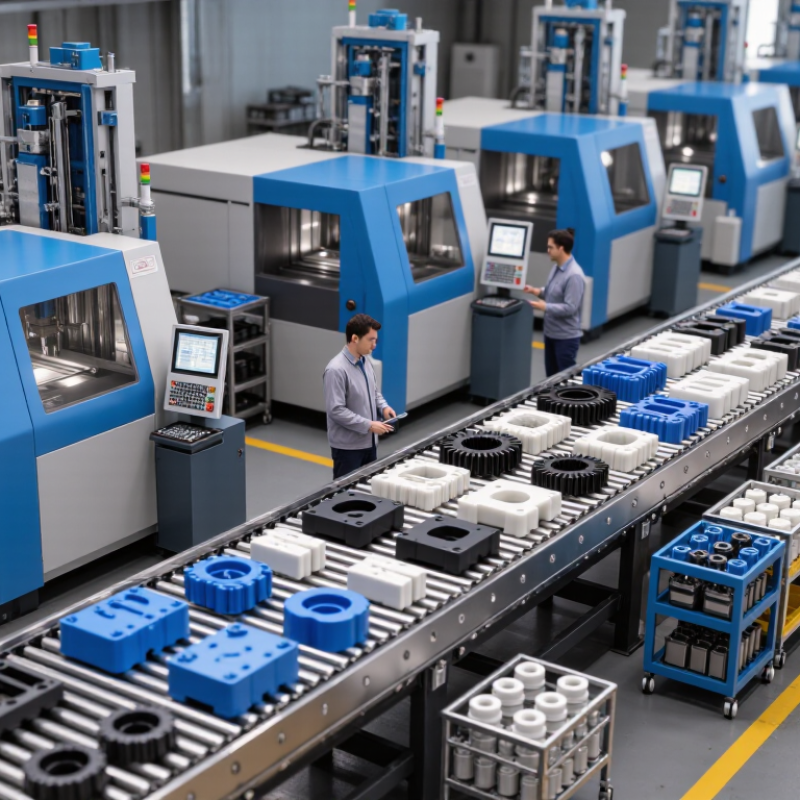
Custom plastic injection molding companies do more than press molten resin into a tool. They translate a product concept into a repeatable manufacturing process. Their engineers review wall thickness, draft angles, ribs, bosses, and parting lines before tooling begins. These details can prevent sink marks, warping, and difficult ejection.
They also recommend suitable materials. A medical enclosure may need dimensional stability, while an automotive clip may require impact resistance and heat performance. A 2024 global market report estimated the plastic injection molding market at more than 190 billion U.S. dollars, showing the scale of demand across packaging, electronics, transportation, and healthcare. Market expansion increases capacity, but it does not guarantee technical discipline.
Tooling is another core responsibility. Companies design or coordinate molds, test initial samples, adjust processing conditions, and document inspection results. Many qualified suppliers use ISO 9001 quality systems, coordinate PPAP documentation, and measure critical dimensions with calibrated equipment. The International Organization for Standardization reports that ISO 9001 remains one of the world’s most widely adopted quality standards.
In practice, a low unit price can hide expensive mold repairs, slow communication, or weak inspection records. That is easy to miss. A reliable partner should explain cycle time, mold life, resin traceability, tolerances, and production risks in plain language. No process is perfect. Even a strong design review may overlook a late material change, so approval samples and controlled revisions remain essential.

Choosing among ten custom plastic injection molding companies requires more than comparing hourly rates. A reliable review starts with evidence from real production work. Ask for sample parts, inspection reports, and references from similar industries. Check whether the team explains draft angles, wall thickness, shrinkage, and mold-flow risks in plain language. Expertise should appear in decisions, not impressive vocabulary. Request a design-for-manufacturing review before approving tooling. Small changes can prevent sink marks, warping, and costly mold revisions.
Evaluate process control on the factory floor. Look for documented resin traceability, calibrated gauges, controlled drying, and inspection records tied to each batch. Confirm the company can hold required tolerances across repeated runs, not just one attractive sample. Ask about cycle monitoring, cavity balance, preventive maintenance, and corrective-action procedures. Certifications may support credibility, but they do not replace direct evidence. A site audit, even by video, can reveal labeling gaps, crowded work areas, or unclear material storage.
Commercial reliability matters just as much. Compare tooling ownership terms, quotation assumptions, lead-time buffers, packaging plans, and change-control rules. Ask who communicates when a shipment slips. Silence is a warning. A low quote may exclude mold maintenance, secondary operations, or validation testing. Score every supplier against the same checklist, then challenge your own assumptions. My checklist is not perfect. A polished presentation can hide weak capacity, while a modest workshop may deliver excellent parts. Independent testing remains wise for safety-critical applications.
| Rank | Evaluation Criterion | Recommended Weight | Objective Benchmark | Evidence to Request | Scoring Method |
|---|---|---|---|---|---|
| 1 | Quality Management | 15% | Current ISO 9001 certification, documented inspection procedures, and formal corrective-action controls. | Certification scope, quality manual, sample inspection report, and recent audit summary. | 0–5 points |
| 2 | Relevant Industry Compliance | 12% | Demonstrated compliance with applicable standards such as ISO 13485 for medical products, IATF 16949 for automotive work, or food-contact requirements where applicable. | Valid certificates, regulatory declarations, traceability procedures, and customer-specific compliance records. | 0–5 points |
| 3 | Engineering and Design-for-Manufacturing Support | 12% | Ability to perform mold-flow analysis, draft-angle review, wall-thickness review, tolerance analysis, and design-for-injection-molding feedback. | Example design review, mold-flow report, engineering workflow, and revision-control procedure. | 0–5 points |
| 4 | Material Knowledge and Traceability | 10% | Controlled handling of engineering thermoplastics, regrind limits, drying requirements, lot identification, and resin certification. | Material certificates, lot-traceability sample, drying records, and approved-material list. | 0–5 points |
| 5 | Equipment Capability | 10% | Machine range, clamping capacity, shot-size suitability, process monitoring, and auxiliary equipment must match the part requirements. | Machine list, tonnage range, preventive-maintenance records, and sample process-monitoring data. | 0–5 points |
| 6 | Tooling and Mold Management | 10% | Documented mold-design review, steel and component specifications, preventive maintenance, spare-parts control, and mold ownership terms. | Mold specification, maintenance schedule, toolroom capabilities, and sample mold trial report. | 0–5 points |
| 7 | Dimensional and Functional Inspection | 10% | Use of calibrated measurement equipment, first-article inspection, capability studies, and inspection plans linked to drawing requirements. | Calibration certificates, dimensional report, control plan, and capability-study example. | 0–5 points |
| 8 | Production Capacity and Delivery Reliability | 10% | Available capacity, realistic cycle-time planning, safety-stock options, and documented on-time-delivery performance. | Capacity plan, production schedule, lead-time assumptions, and anonymized delivery-performance records. | 0–5 points |
| 9 | Total Cost and Commercial Transparency | 6% | Quotation should separate tooling, piece price, secondary operations, packaging, inspection, freight assumptions, and recurring costs. | Itemized quotation, payment terms, tooling ownership clause, revision charges, and price-validity period. | 0–5 points |
| 10 | Communication, Risk Management, and Customer Support | 5% | Clear project ownership, escalation procedures, engineering-change control, contingency planning, and after-sales support. | Project communication plan, risk register, business-continuity plan, and response-time commitment. | 0–5 points |
| Total Evaluation Weight | 100% | Use the weighted score to compare shortlisted suppliers objectively; verify all claims through current documentation and sample production. | |||
The leading custom plastic injection molding companies differ in equipment, process control, and engineering support. This selection reflects practical strengths rather than a strict ranking.
One high-volume producer serves automotive programs with automated inspection and stable cycle monitoring. Another supports medical components through clean production areas and detailed traceability. A third specializes in tight-tolerance housings, using mold-flow analysis before cutting steel. One regional supplier focuses on short runs and quick tooling changes. Its engineers often help simplify complex part geometry. A fifth company builds large structural parts with multi-ton presses and careful warpage control.
A sixth manufacturer combines injection molding with ultrasonic welding, reducing outside handling. Another works with recycled and engineering-grade resins, while documenting material performance for each project. An electronics-focused company offers insert molding and fine cosmetic control for visible enclosures. One experienced supplier maintains in-house mold repair, which can shorten unexpected downtime. The tenth company supports global production transfers with standardized work instructions and sample approval records.
Reliable selection still requires questions. Ask for process capability data, inspection methods, resin traceability, and clear corrective-action records. Factory visits can reveal overlooked details, such as resin storage, tool maintenance, and operator training. A polished website proves little. Even experienced suppliers may underestimate packaging risks or late design changes. Buyers should review pilot-run results before approving full production, especially when parts include thin walls, threaded features, or demanding surface finishes.
Comparing the 10 best custom plastic injection molding companies requires more than checking production prices. Examine their services, materials, technologies, and industry experience. A capable supplier should support design-for-manufacturing reviews, rapid prototypes, mold construction, production, finishing, and assembly. Clear inspection reports matter, especially when dimensions are tight. Ask how they handle mold maintenance and replacement parts.
Material selection changes performance. Polypropylene suits lightweight housings, while ABS offers a balanced surface and impact resistance. Polycarbonate handles demanding strength requirements. Nylon performs well under wear, but it may absorb moisture. TPE supports flexible grips and seals. Available technologies may include insert molding, overmolding, multi-shot molding, thin-wall molding, and automated visual inspection. These options affect tooling costs, cycle time, appearance, and consistency.
Tips: Request molded samples, material certificates, tolerance data, and a realistic production schedule. Confirm whether the supplier has experience in your industry, such as medical devices, automotive components, electronics, packaging, or industrial equipment. Ask about traceability and corrective-action procedures. A factory tour can reveal cleanliness, storage discipline, and operator training. Do not rely on attractive photos alone. A perfect comparison is difficult. Some suppliers communicate well but lack advanced testing. Others have strong machinery yet provide weak engineering support. Review evidence before making a decision.
Choosing a custom plastic injection molding partner starts with evidence, not polished promises. Ask for parts similar in geometry, resin, tolerance, and annual volume. A supplier experienced with thin walls may still struggle with glass-filled materials. Request sample inspection reports. Look for cavity balance, warpage data, and documented corrective actions. Real experience leaves records. Vague claims do not.
Review the engineering process before signing a purchase order. A capable team should discuss draft angles, gate location, cooling channels, shrinkage, and ejection marks. Ask how design changes are controlled. One missed revision can create hundreds of unusable parts. Verify mold steel, expected tool life, maintenance intervals, and spare-component plans. Check measurement equipment, calibration dates, and sampling frequency. If possible, visit the molding floor. Notice cleanliness, material labels, machine condition, and rejected-part handling. Small details matter.
Quality certification can support trust, but certificates alone cannot guarantee stable production. Confirm traceability from incoming resin to packed components. Request a pilot run and inspect dimensions, appearance, fit, and function under real assembly conditions. Discuss lead times with capacity, holidays, maintenance, and material shortages included. Price deserves scrutiny. A low quote may exclude tooling changes, testing, or packaging. Communication should remain direct when problems appear. No partner performs perfectly. The better question is how openly they detect, explain, and correct mistakes. Put acceptance criteria in writing, including tolerances, cosmetic limits, testing methods, and response times.