How to Choose Injection Molding Plastics for Marine Applications?
Choosing the right materials for marine applications is crucial. Injection molding plastic for marine applications requires careful consideration of environmental factors. These plastics must resist corrosion, UV radiation, and extreme temperatures. It is essential to select materials that offer reliability and durability in challenging conditions.
Understanding the specific needs of your project is vital. Marine environments expose materials to saltwater and intense sunlight. This exposure can degrade some plastics over time. Therefore, you must evaluate the properties of various injection molding plastics. Factors include tensile strength, flexibility, and resistance to impact.
Collaboration with experts in material science can enhance your product’s performance. Manufacturers often face challenges when choosing the right plastic. Researching different material options allows for informed decisions. This process ensures longevity and reliability in marine applications. Ultimately, selecting injection molding plastic for marine applications significantly impacts product success.
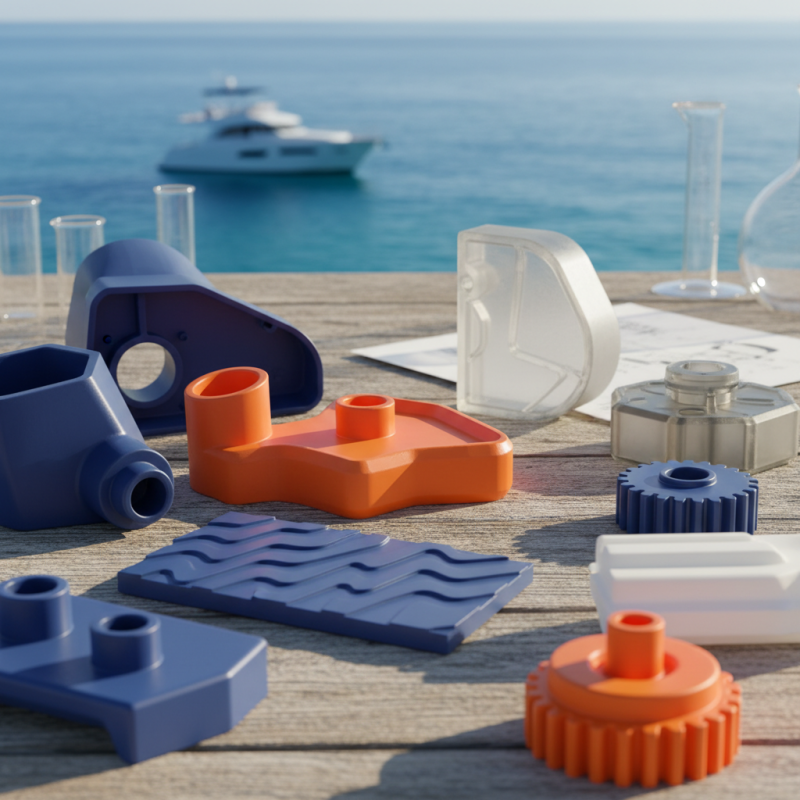
Understanding the Specific Requirements for Marine Plastic Applications
When selecting injection molding plastics for marine applications, understanding their specific demands is critical. Marine environments expose materials to harsh conditions, such as high humidity and extreme temperatures. A report by the American Society for Testing and Materials (ASTM) emphasizes that materials must resist corrosion and UV degradation. For instance, polypropylene and polyethylene are popular choices due to their excellent resistance to saltwater and impact strength.
Mechanical strength is another paramount factor. Research indicates that marine-grade plastics must endure significant stress and strain. A study published in the Journal of Plastic Engineering shows that flexural strength ratings are vital. Materials like polycarbonate and PVC can exhibit superior mechanical properties, but their long-term durability often raises questions. In some cases, using a blend of different plastics can enhance performance.
While cost-effectiveness is important, it should not override material appropriateness. Many manufacturers encounter pitfalls when prioritizing price over quality. The right material choice can lead to prolonged service life and reduced failures. As such, considering factors like water absorption and thermal stability becomes essential for achieving reliable outcomes in marine applications.
Material Properties: Key Characteristics for Marine Molding Plastics
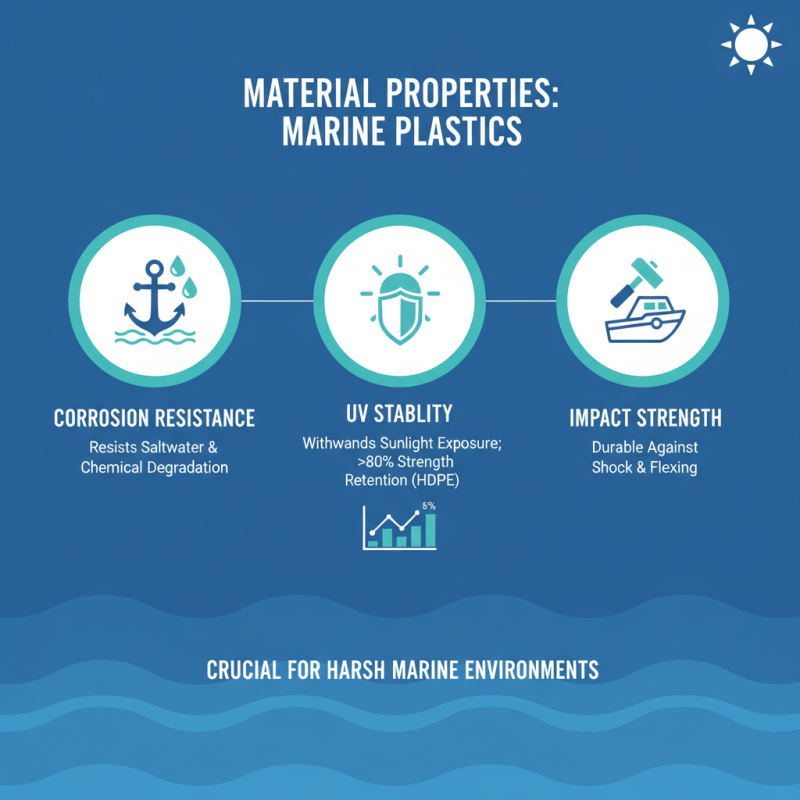
When choosing plastics for marine applications, material properties are crucial. Key characteristics include resistance to corrosion, UV stability, and impact strength. Marine environments are harsh, making these properties vital. For example, high-density polyethylene (HDPE) scores well on UV resistance, with studies showing more than 80% retention of its mechanical properties after years in the sun.
Another essential factor is water absorption. Plastics with low water absorption prevent weakening and are ideal for submerged applications. Polystyrene, while lightweight, absorbs water quickly, leading to structural failures. On the other hand, Polypropylene (PP) demonstrates excellent moisture resistance, making it a preferred choice for many marine components.
Thermal stability is often overlooked but significant. The temperature variations in marine settings can cause dimensional changes in improperly chosen materials. A report indicated that materials like PVC showed considerable warping in extreme conditions. Therefore, selecting the right plastic requires a balance of these vital properties for reliability and performance in challenging marine conditions.
Evaluating Resistance to Environmental Factors: Water, UV, and Corrosion
When selecting injection molding plastics for marine applications, evaluating resistance to environmental factors is crucial. Water, UV exposure, and corrosion are significant threats. According to a study by the American Society of Testing and Materials, certain plastics can lose up to 50% of their physical properties when subjected to prolonged UV exposure. This highlights the need for materials that retain strength and flexibility under harsh conditions.
Polypropylene and polyethylene are commonly used in the marine industry due to their inherent resistance to moisture and corrosion. These materials exhibit excellent durability in saltwater environments. A report by the Plastics Industry Association noted that these plastics can withstand high salt concentrations without significant degradation. However, it is essential to consider the specific application, as other factors like mechanical stress and temperature fluctuations can affect performance.
Despite their advantages, some plastics require additional treatments for improved longevity. For example, adding UV stabilizers can enhance resistance to sunlight. However, this adds complexity to the selection process. Marine professionals often encounter difficulties in balancing cost, performance, and environmental impact. Evaluating available data and understanding material properties is essential for informed decision-making.
Cost-Effectiveness vs. Performance: Balancing Budget and Quality
When considering injection molding plastics for marine applications, balancing
cost-effectiveness and performance is critical. The marine environment presents unique challenges.
Plastics must withstand saltwater, UV exposure, and temperature fluctuations. According to a recent industry report,
over 30% of marine failures result from inadequate material selection.
Cost is always a concern. Some manufacturers aim for lower expenses by choosing cheaper materials. Yet, this approach often leads to higher maintenance costs in the long run.
A study indicated that using high-performance polymers can reduce overall lifetime costs by 20-30%.
Balancing budget constraints with performance needs requires thoughtful analysis of material specifications.
Quality should never be compromised. Data shows that 60% of marine components fail prematurely due to inferior plastic choices.
Selecting materials reinforced with additives can enhance durability and longevity. Striving for optimal performance, while remaining within budget, is essential.
The right material choices can yield significant benefits, both financially and functionally. Reflecting on these facts can prevent costly mistakes
and enhance overall project success.
Selecting the Right Injection Molding Process for Marine Plastics
When selecting the injection molding process for marine plastics, several factors come into play. The marine environment is harsh, and the materials used must withstand corrosion, UV exposure, and temperature fluctuations. Understanding the specific application helps in choosing the right type of plastic. Two common options are polypropylene and polycarbonate, known for their durability and resistance.
The injection molding technique itself also greatly influences the quality of the final product. A well-designed mold can enhance the material's strength and improve the overall performance. It’s crucial to think about the mold's cooling and heating cycles. Improper temperature control can lead to warping or structural integrity issues.
While experience in marine applications is invaluable, one must not underestimate the role of testing. A prototype can reveal potential weaknesses. Engaging in rigorous testing will provide insights into long-term performance. This process can be iterative, requiring adjustments along the way. Marine applications demand high reliability; thus, learning from each cycle is essential for success.
How to Choose Injection Molding Plastics for Marine Applications?
| Plastic Type |
Key Properties |
Advantages |
Disadvantages |
Common Applications |
| Polypropylene (PP) |
Chemical resistance, durable, lightweight |
Good impact resistance, cost-effective |
Limited temperature resistance |
Marine gear, boat components |
| Acrylonitrile Butadiene Styrene (ABS) |
Strong, tough, impact-resistant |
Excellent surface quality, easy to paint |
Less chemical resistance than other plastics |
Boat hulls, instrument panels |
| Polyethylene (PE) |
Low density, impact-resistant |
Flexible, good chemical resistance |
Lower rigidity |
Marine storage containers, buoys |
| Nylon (Polyamide) |
Strong, tough, heat-resistant |
Excellent wear resistance |
Absorbs moisture, can swell |
Rope, marine fasteners |
| Polycarbonate (PC) |
High impact strength, transparency |
Lightweight, UV resistance |
Can be scratched easily |
Windshields, light covers |