Why Choose Injection Molding for Automotive Parts at Canton Fair?
The automotive industry continuously seeks innovative manufacturing processes to enhance efficiency and reduce costs. Injection Molding Automotive Parts has emerged as a critical solution. This technique allows for high-volume production of complex parts with precision. At the Canton Fair, showcasing such parts offers unique opportunities for manufacturers and buyers alike.
The upcoming 2026 Canton Fair emphasizes advanced manufacturing, making it a prime venue for the injection molding sector. AI technology will assist buyers in finding suppliers meeting necessary certifications. This efficiency is vital in navigating over 1.5 million square meters of exhibition space. However, challenges remain regarding environmental sustainability and material waste, prompting producers to reflect on their practices.
As the fair approaches, it's essential to consider the full implications of using Injection Molding Automotive Parts. While the approach is effective, it requires ongoing refinement and adaptation to ensure quality and sustainability. The market looks forward to innovations that arise from collaboration and critical evaluation at this event.
Benefits of Injection Molding in Automotive Manufacturing
Injection molding is a key technology in automotive manufacturing. It offers precise and efficient production of complex parts. This method allows for high-volume production with consistent quality. The ability to create intricate designs is essential for modern vehicles. Injection molding can produce lightweight components, which contribute to improved fuel efficiency.
One notable benefit is cost-effectiveness. Initial tooling costs can be high, but the long-term savings are significant. Once the molds are created, the cost per unit drops sharply. However, this requires a careful analysis of production needs. Not every project will justify the upfront investment.
Another advantage is rapid prototyping. It allows manufacturers to test designs quickly. Fast iterations can lead to innovations in automotive technology. However, over-reliance on this method may lead to complacency. It's important to balance technology with skilled craftsmanship. Both are essential for high-quality automotive parts.
Why Choose Injection Molding for Automotive Parts at Canton Fair?
| Benefit |
Description |
Example Applications |
| High Efficiency |
Injection molding offers faster production rates compared to other methods. |
Bumpers, dashboards |
| Cost-effectiveness |
Reducing material waste and labor costs leads to lower overall production costs. |
Molded frame components, exterior panels |
| Complex Designs |
Ability to create intricate shapes and features that would be difficult to achieve with other methods. |
Geometric parts, detailed housings |
| Consistency and Quality |
Produces parts with precise dimensions and high-quality surface finishes. |
Engine components, fluid reservoirs |
| Material Versatility |
Compatible with a wide range of thermoplastics and thermosetting polymers. |
Plastic clips, connectors |
Key Factors Driving Popularity at Canton Fair
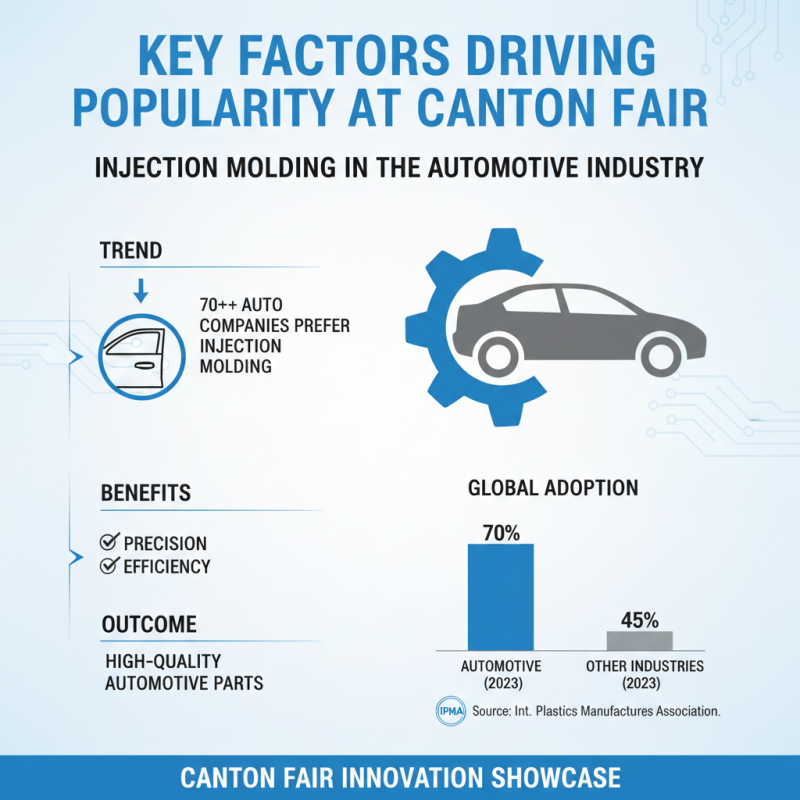
Injection molding is becoming increasingly popular in the automotive industry. At the Canton Fair, this trend is clear. A recent report from the International Plastics Manufacturers Association shows that more than 70% of automotive companies prefer injection molding for component production. This method offers precision and efficiency, essential for high-quality automotive parts.
The speed of production is impressive. Injection molding can produce thousands of parts in a single day. Meanwhile, the cost savings are notable. Companies can reduce material waste by nearly 30% compared to other manufacturing techniques. This is attractive for businesses looking to maximize their budgets at the Canton Fair. The ability to create complex shapes also gives manufacturers an edge. However, some still struggle with initial setup costs. These expenses can create a barrier for smaller firms, leading to a gap in access to advanced technology.
Environmental considerations also play a role. Many automotive companies are shifting towards sustainable practices. Injection molding supports this trend; it often uses recyclable materials. However, the industry still faces challenges with certain plastics. Not all materials are environmentally friendly. Companies must be cautious in selecting their inputs. The Canton Fair highlights both the advantages and the hurdles of this critical manufacturing process.
Comparison of Injection Molding vs. Other Manufacturing Techniques
Injection molding is a favored method for producing automotive parts. It offers precision and efficiency. This technique allows for complex designs with high repeatability. Other manufacturing methods, like machining or casting, can fall short in time and cost efficiency. Machining often involves more material waste. Casting requires longer lead times and can lead to shape limitations.
The challenge with traditional methods often lies in scalability. For mass production, injection molding excels. It can produce thousands of parts quickly. However, it does require significant upfront investment for molds. This can deter some small manufacturers. There’s also the need for ongoing maintenance of equipment, which can be overlooked.
Despite these challenges, the benefits of injection molding in automotive applications are notable. It enhances supplier reliability and product quality. Many manufacturers need to assess their production needs carefully. The decision to choose injection molding should consider both costs and technological advancement. The industry continues to evolve, pushing for improved methods and sustainability.
Real-world Applications of Injection Molded Parts in Automotive Industry
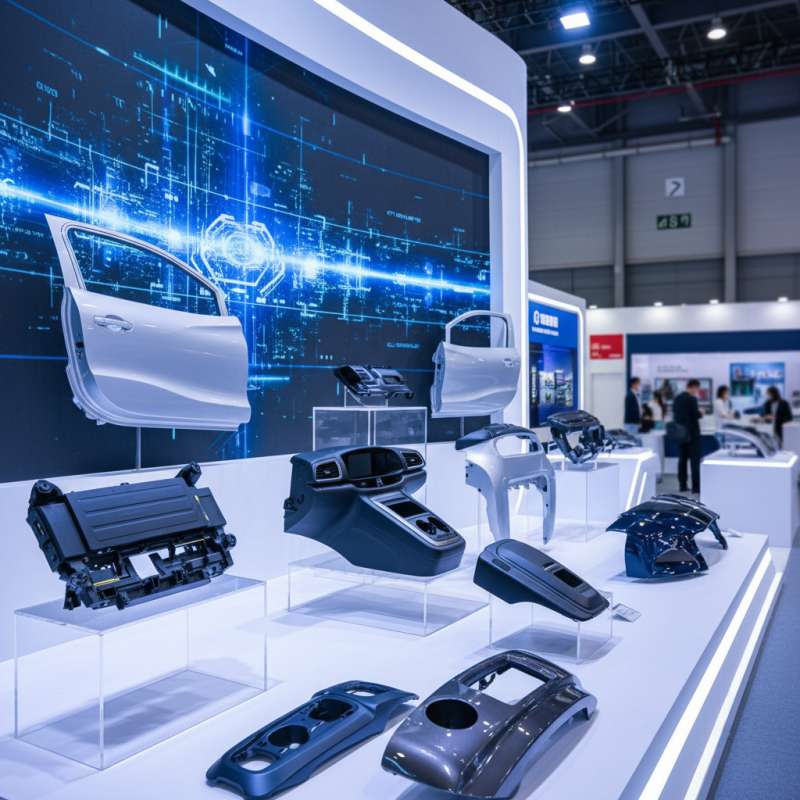
Injection molding is revolutionizing the production of automotive parts. This method allows manufacturers to create complex shapes with high precision. For instance, components like dashboards and interior trims benefit from this technology. They require intricate designs that meet strict industry specifications.
Real-world applications showcase the versatility of injection-molded parts. Fuel tanks and bumpers are often produced using this method. The ability to mold lightweight yet durable parts is crucial. However, the technology does have limitations. Sometimes, achieving the desired finish can be challenging.
Sustainability is another pressing concern. Automotive manufacturers are exploring eco-friendly materials for injection molding. While immediate solutions may be limited, ongoing research is encouraging. A few companies are already venturing into bio-based resins. These innovations hold promise for more sustainable production in the future.
Injection Molding Applications in the Automotive Industry
Future Trends in Injection Molding for Automotive Innovations
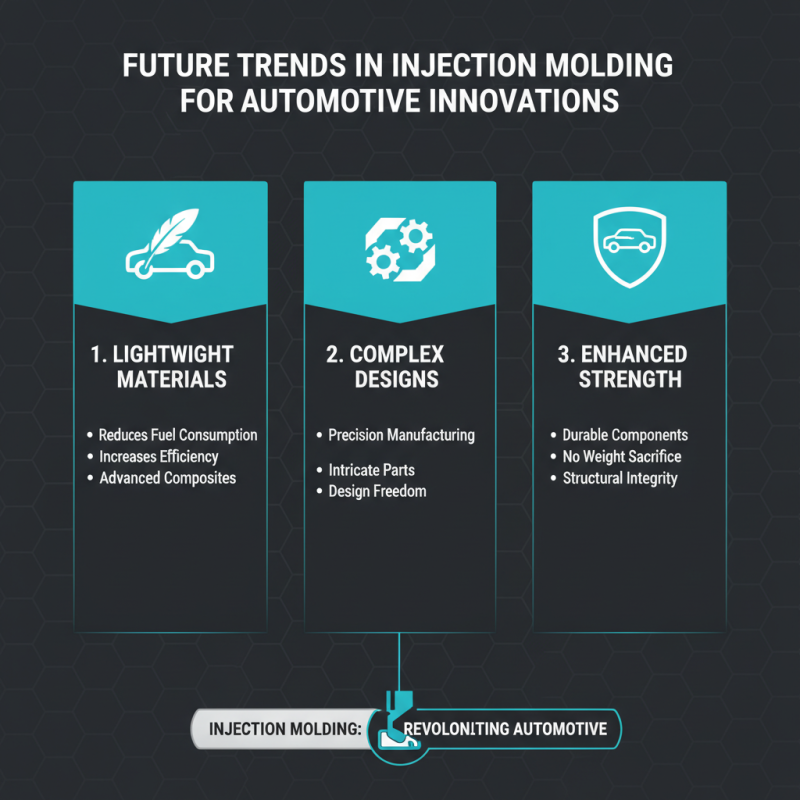
Injection molding is revolutionizing the automotive industry. As we look towards future trends, several innovations emerge. Lightweight materials are becoming essential. These materials reduce fuel consumption and increase efficiency. In this context, injection molding shines. Manufacturers can produce complex designs with precision and ease. This technology allows for more intricate parts without sacrificing strength.
Sustainability is another growing concern. The industry is moving towards eco-friendly practices. Biodegradable materials and recycling options are on the rise. However, implementing these changes poses challenges. The transition requires investment and research. Many companies face hurdles in material selection and processing. The need for skilled labor is also increasing as technology evolves.
Collaboration between manufacturers and suppliers is vital. Knowledge sharing can lead to improved techniques and materials. Yet, communication gaps often hinder progress. Companies must work to bridge these gaps for better outcomes. Future innovations in injection molding depend on overcoming these hurdles together. The journey is ongoing, filled with opportunities and obstacles.