2026 How to Optimize Injection Molding for Automotive Needs?
The Injection Molding Automotive Industry is experiencing significant evolution driven by technological advancements. As automakers demand lighter, more durable components, injection molding has become essential for meeting these needs. According to a report by Grand View Research, the market for injection molding in automotive applications is projected to reach $40 billion by 2025. This growth underscores the importance of optimizing processes to enhance efficiency and sustainability.
However, challenges persist. Many manufacturers struggle with cycle times and material waste. Reports highlight that up to 25% of materials can be lost during production if not properly managed. Such statistics emphasize the need for continuous improvement and innovation in injection molding practices. Companies must explore new materials, like bio-based plastics, to avoid environmental concerns.
Implementing best practices in design and production could drastically improve outcomes. For instance, using simulation software to fine-tune designs can lead to reductions in defects and waste. Yet, despite these advancements, many organizations face implementation gaps. Understanding the intricacies of injection molding processes remains vital for stakeholders aiming to thrive in this competitive landscape.

Understanding Injection Molding: Fundamentals and Applications in Automotive
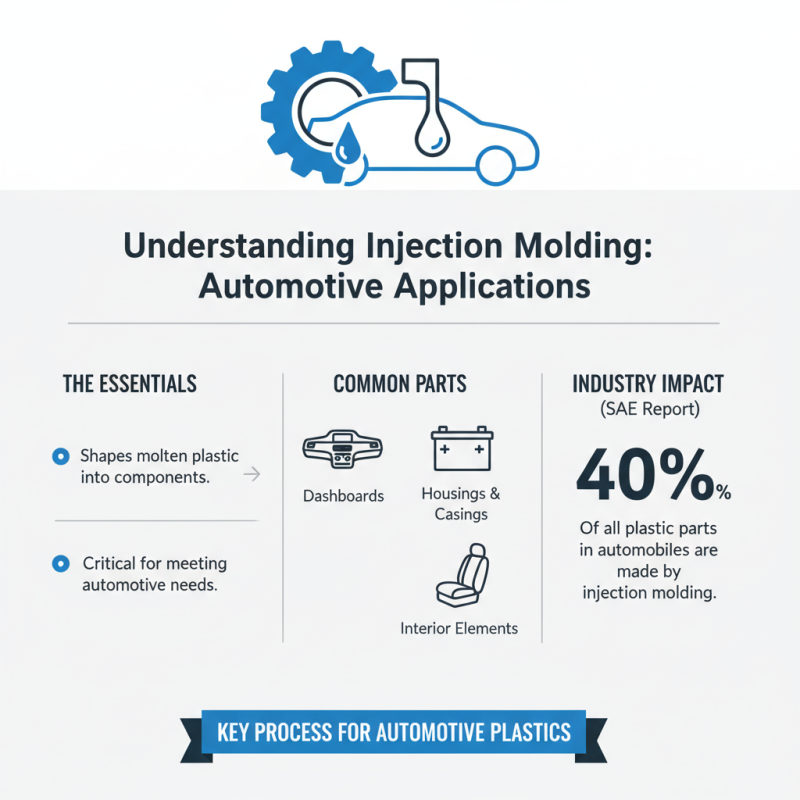
Understanding injection molding is critical for meeting automotive needs. This process shapes molten plastic into specific components. It is widely used for parts like dashboards, casings, and interior elements. According to a recent industry report by the Society of Automotive Engineers, injection molding accounts for approximately 40% of plastic parts produced for automotive applications.
Optimizing injection molding requires knowledge of material properties. Factors like melt temperature, pressure, and cooling time crucially impact part quality. Studies show that adjusting these parameters can reduce scrap rates by up to 15%. Engineers should monitor the entire process to identify areas for improvement. Techniques such as mold flow analysis can significantly enhance production efficiency and component performance.
Tips: Always test various materials. Consider using recycled plastics to lower costs and improve sustainability. Regularly calibrate machines to ensure precision. Reflect on past production issues to avoid repeating mistakes. Adopting a data-driven approach can lead to continuous improvements in your injection molding processes.
Key Factors Influencing Injection Molding in Automotive Production
Injection molding plays a pivotal role in automotive manufacturing. Various factors influence its optimization for automotive needs. One critical aspect is material selection. According to a recent report by the Society of Automotive Engineers, nearly 30% of injected plastics used in vehicles are thermoplastics, known for their durability and lightweight properties. Selecting the right material can enhance performance and reduce costs.
Mold design is another key element. A well-designed mold increases production efficiency and ensures high-quality parts. Inaccurate designs can lead to significant waste. The American Society for Quality reports that poor mold design increases waste by up to 15%. This statistic highlights the necessity for precision in design and fabrication, as it directly impacts operational efficiency.
Temperature control during the process also warrants attention. Maintaining optimal temperature is crucial for consistent product quality. Fluctuations can cause defects or delays. Studies show that maintaining steady temperatures can reduce cycle times by up to 20%. Nonetheless, achieving this ideal balance is challenging and requires continuous monitoring, making it a potential area for improvement within the industry.
Material Selection for Optimal Performance in Automotive Injection Molding
Material selection plays a critical role in the performance of automotive injection molding. The right materials can enhance durability, reduce weight, and improve fuel efficiency. For example, according to the Plastics Industry Association, using engineering thermoplastics can lower vehicle weight by 15-20%. This reduction directly impacts fuel consumption, leading to a greener automotive industry.
Polypropylene and polyethylene are popular choices for general applications in automotive parts. Their low density contributes to overall vehicle weight reduction. However, specific parts may require high-performance materials like polyamide or polycarbonate, which offer superior thermal and impact resistance. A report from Grand View Research suggests that the automotive plastics market size is expected to reach $55 billion by 2027, driven by advancements in material science.
Despite these advancements, challenges exist in material sourcing and processing. Certain materials may present supply chain constraints or higher costs. Additionally, the recycling of injection-molded components remains a concern. As material properties evolve, manufacturers must assess the life cycle impacts of their selections. The landscape is complex, and ongoing research is vital for optimizing material choices in automotive applications.
2026 Injection Molding Material Selection for Automotive Applications
Design Considerations for Injection Molded Parts in the Automotive Industry
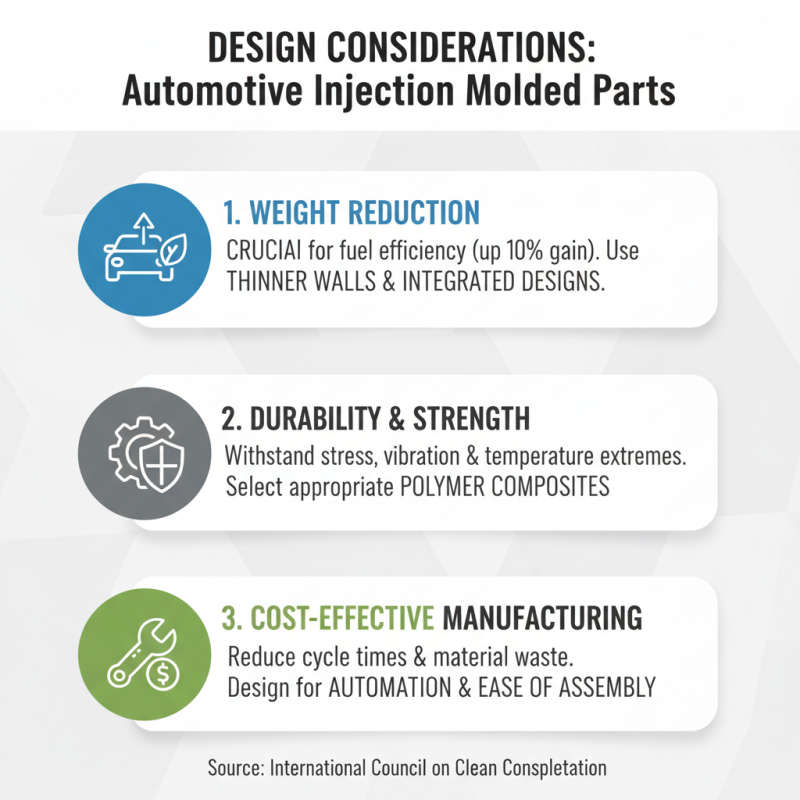
Injection molding plays a crucial role in the automotive sector. When optimizing parts for this industry, several design considerations arise. First, weight reduction is imperative. According to the International Council on Clean Transportation, lightweight materials can improve fuel efficiency by up to 10%. Aiming for thinner walls or more integrated designs may help achieve this goal.
Material selection is another critical factor. Advanced polymers, such as PPS and PEEK, have started gaining traction. These materials can withstand high temperatures and resist chemicals, making them ideal for automotive applications. However, they can be more costly. Balancing cost with performance remains a challenge for manufacturers.
**Tips:** Consider using simulation tools to predict how designs behave under real-world conditions. This can help identify flaws early. Additionally, try to incorporate modular designs. This reduces waste during production and allows for easier upgrades in the future. Ensuring ease of assembly can greatly influence the overall efficiency of the project's timeline, which is often overlooked. The complexities of injection molding processes can lead to unexpected challenges, emphasizing the need for flexibility in design approach.
Best Practices for Quality Control in Automotive Injection Molding Processes
Quality control is crucial in automotive injection molding. Ensuring precision can significantly impact vehicle performance. Each component must meet stringent standards. Consistency in material quality is vital. Variations can lead to defects. Implementing a robust quality management system is essential.
Regular inspections help identify potential issues early. Monitoring temperature and pressure during the molding process aids accuracy. Small deviations can cause serious problems later. Using automated inspection tools offers reliable results. Quality audits should be routine, not sporadic. Teams need to be trained in these practices.
Feedback loops are necessary. They help in understanding what works and what doesn’t. Documenting these findings fosters continuous improvement. While striving for perfection, mistakes will happen. Reflecting on failures builds resilience. Quality control is not just about checking; it's about learning and adapting.
2026 How to Optimize Injection Molding for Automotive Needs?
| Dimension |
Best Practice |
Impact on Quality |
Measurement Method |
| Material Selection |
Use high-quality polymers |
Improves strength and durability |
Tensile Testing |
| Process Parameters |
Optimize temperature and pressure |
Reduces defects and improves finish |
Thermocouples and Pressure Gauges |
| Tooling |
Invest in quality molds |
Consistent part dimensions |
Dimensional Inspection |
| Quality Control |
Implement regular inspections |
Early detection of issues |
Statistical Process Control |
| Post-Processing |
Include finishing processes |
Enhances surface quality |
Visual and Surface Finish Inspection |