Leave Your Message

7 Tips for Choosing Golf Cart Parts Molding Services

Choosing the right Golf Cart Parts Molding Services can shape your product’s safety, appearance, and long-term performance. A molded dashboard, battery cover, or wheel arch must fit accurately and withstand vibration, heat, moisture, and repeated use. Small dimensional errors may create noise, loose fittings, or costly assembly delays.

This guide introduces seven practical tips for evaluating a molding partner. It considers material knowledge, mold design, production equipment, quality inspection, communication, pricing, and delivery reliability. Experienced manufacturers should explain resin options, draft angles, wall thickness, shrinkage control, and surface finishes in clear language. They should also provide realistic samples, inspection records, and evidence of similar projects. Claims alone are not enough.

Look closely at the details.

A capable supplier may review your CAD drawing and identify weak ribs before tooling begins. They may recommend reinforced plastic near mounting holes or smoother edges around frequently handled parts. These suggestions show useful engineering experience, not simple sales talk. Still, no supplier is perfect. Design changes, material shortages, or trial-mold adjustments can affect schedules. A reliable partner admits these risks and offers practical solutions. Ask how defects are measured, how samples are approved, and how replacement parts remain consistent across production batches. Transparent answers build trust. Careful comparison can reduce rework, protect your budget, and support a more dependable golf cart product.
7 Tips for Choosing Golf Cart Parts Molding Services

Understanding Golf Cart Parts Molding and Service Requirements

7 Tips for Choosing Golf Cart Parts Molding Services

Understanding Golf Cart Parts Molding and Service Requirements

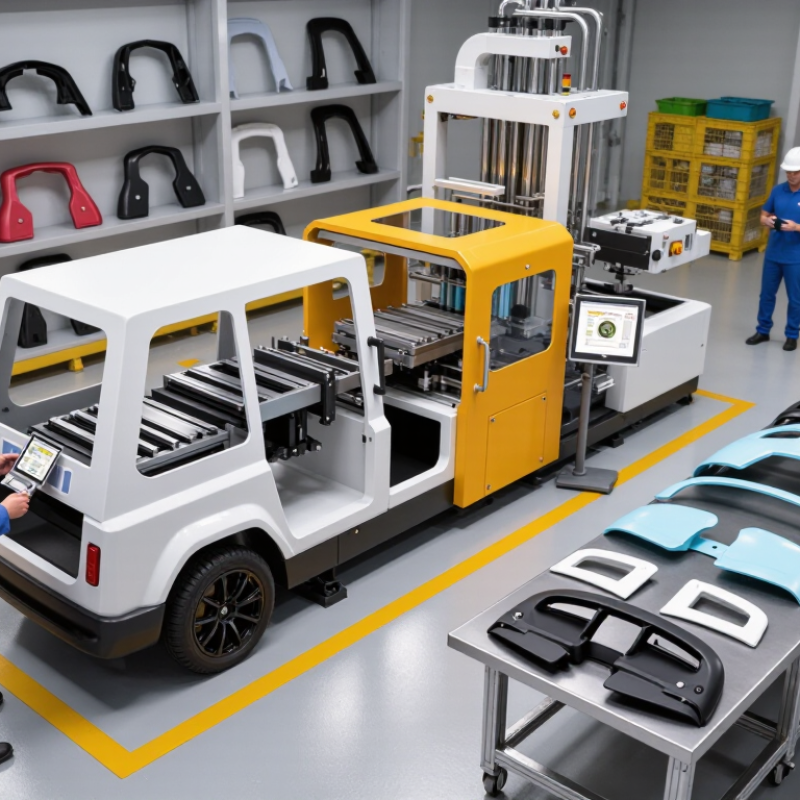
Golf cart parts molding requires more than copying an old component. Grand View Research estimates the global golf cart market will grow at a mid-single-digit annual rate through 2030. That growth increases pressure on suppliers to deliver consistent, durable parts. Tip 1: Confirm the service’s experience with dashboards, battery covers, bezels, and protective housings. Tip 2: Ask whether engineers review load points, wall thickness, draft angles, and shrinkage before tooling. Small errors can cause loose clips or visible sink marks.

Tip 3: Match the resin to the working environment. Outdoor parts need ultraviolet resistance, impact strength, and stable performance during temperature changes. Tip 4: Require documented dimensional inspections using calibrated equipment. Tip 5: Check whether the supplier can support prototypes, low-volume trials, and production scaling. MarketsandMarkets’ recent industry forecast also identifies customization and lightweight components as continuing growth factors. Material savings matter, but thin walls can fail around screw bosses. That trade-off deserves testing.

Tip 6: Review mold-maintenance procedures, replacement inserts, and cavity-life records. A perfect-looking quote can hide weak maintenance. Tip 7: Request traceability for resin batches, inspection results, and corrective actions. I have seen teams approve samples too quickly, then discover warping after assembly. That mistake is avoidable. Service requirements should include lead times, packaging protection, revision control, and clear acceptance tolerances. A capable molding partner explains limitations openly, instead of promising every geometry without qualification.
7 Tips for Choosing Golf Cart Parts Molding Services

Understanding Golf Cart Parts Molding and Service Requirements

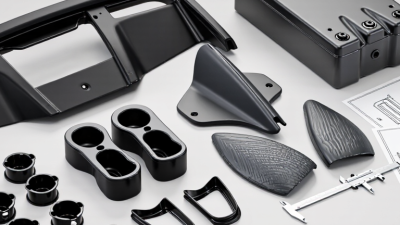
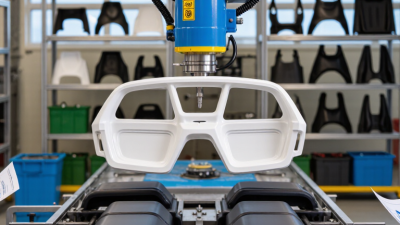
This planning benchmark ranks the practical factors commonly used when evaluating molding services for golf cart components. Material and UV durability, dimensional accuracy, tooling capability, and inspection systems should receive the greatest attention because outdoor exposure, repeated vibration, and tight part fit can directly affect service life and assembly quality.

Evaluating Material Selection and Mold Design Expertise

7 Tips for Choosing Golf Cart Parts Molding Services

Material selection should begin with the part’s real working environment. Golf cart components face sunlight, rain, vibration, mud, and repeated impacts. Ask whether the molder compares resins by strength, UV resistance, temperature stability, and dimensional control. A low-cost material can become brittle after months outdoors. That mistake is expensive.

Request test data, not vague promises. Useful records include impact results, shrinkage rates, color stability, and moisture behavior. For battery covers, dashboards, and protective housings, wall thickness must support strength without creating sink marks. Recycled content may reduce cost, but its consistency requires careful verification. It is not always predictable.

Mold design expertise affects every finished part. Review how engineers plan draft angles, parting lines, gates, vents, cooling channels, and ejector locations. These details influence warpage, surface marks, cycle time, and assembly fit. Ask for flow analysis or a prototype before approving production tooling. A good design catches trouble early. Still, no simulation replaces inspection of actual samples. I have seen attractive prototypes fail after repeated heat cycles. The lesson is uncomfortable: material and mold decisions must be tested together, not evaluated in separate departments. Suppliers should also provide measured tolerances, maintenance plans, and clear revision records. Without traceable documents, quality discussions become opinions.

Checking Manufacturing Precision, Quality Control, and Certifications

7 Tips for Choosing Golf Cart Parts Molding Services

Manufacturing precision should be checked before discussing price. Ask for dimensional tolerances on every critical feature, including mounting holes, clips, and battery covers. A reliable molder should explain how these limits are measured. Useful evidence includes coordinate measuring machine reports, first-article inspection records, and sample parts from recent production. Hold a part in your hand. Check its fit, surface consistency, edges, and warping under normal light. Small deviations can create rattling, weak fastening, or difficult assembly.

Quality control must continue beyond final inspection. Request details about resin identification, drying conditions, mold temperature, and injection pressure. Material batch records improve traceability when a defect appears months later. In-process checks should catch short shots, sink marks, flash, and color variation. I once trusted a visually perfect sample too quickly. Later, uneven wall thickness caused cracking near a screw boss. That mistake changed my review process. Ask how the supplier handles corrective actions, not only how it prevents defects.

Certifications can support confidence, but they are not automatic proof of quality. Verify the certificate number, issuing organization, validity period, and covered manufacturing site. An ISO 9001 certification may indicate a controlled quality system, while material or environmental certificates address different concerns. Check whether the documentation matches your actual part and market requirements. A polished certificate is easy to admire. Production records matter more. Also review inspection equipment calibration and operator training. No checklist is perfect. Leave room for independent testing when safety, durability, or tight fit is critical.

7 Tips for Choosing Golf Cart Parts Molding Services - Checking Manufacturing Precision, Quality Control, and Certifications
Tip Evaluation Dimension Practical Benchmark Data or Documents to Review Questions to Ask the Molding Service Provider
1 Manufacturing Precision Dimensional capability
  • Confirm tolerances directly from the approved part drawing.
  • For critical dimensions, request a capability target such as Cpk ≥ 1.33 after the process is stable.
  • Verify that measurement results use the same datum structure and units as the drawing.
  • First-article inspection report
  • Dimensional layout with actual measurements
  • Gauge calibration records
  • Process capability study for critical-to-function features
How are mold shrinkage, warpage, parting-line mismatch, and insert position controlled for dashboards, body panels, bezels, and protective covers?
2 Mold and Tooling Design Design for manufacturability
  • Review draft angles, wall-thickness transitions, ribs, bosses, gates, vents, and ejection points before tool release.
  • Use uniform wall sections where the part design allows it to reduce sink marks and distortion.
  • Define mold steel, expected tool life, maintenance intervals, and spare-part responsibilities in writing.
  • 3D mold-flow or filling-analysis summary, when applicable
  • Tool design review record
  • Steel and component specifications
  • Mold maintenance and change-history log
Which design risks were identified before machining, and how will the tooling team control cooling balance, ejection marks, weld lines, and dimensional drift?
3 Material Selection and Traceability Application suitability
  • Match resin grade and additives to impact, UV, temperature, chemical, and weathering requirements.
  • Define color, gloss, recycled-content limits, and moisture-conditioning requirements where relevant.
  • Maintain lot-level traceability from incoming resin to finished molded parts.
  • Material technical data sheet
  • Safety data sheet and certificate of analysis
  • Incoming-material inspection records
  • Batch or lot traceability records
Can the material documentation verify tensile or impact performance, UV resistance, flammability requirements, and compatibility with cleaners or battery-area exposure?
4 Quality-Control System Process control
  • Require documented inspection plans for incoming materials, first-off parts, in-process checks, and final release.
  • Use control plans and PFMEA-style risk analysis for critical molding operations.
  • Confirm procedures for nonconforming parts, corrective action, and change control.
  • Quality manual and inspection plan
  • Process parameter records
  • Nonconformance and corrective-action reports
  • Internal audit or layered-process-audit records
Which characteristics are checked every shift or every lot, what sampling plan is used, and how are process alarms or out-of-control conditions handled?
5 Testing and Validation Functional reliability
  • Validate fit, assembly, appearance, and function against approved acceptance criteria.
  • Use application-specific tests for impact, load, vibration, environmental exposure, or chemical resistance when required.
  • Separate prototype approval from production-process approval.
  • Prototype and production validation reports
  • Fit-and-function test results
  • Environmental or durability test records
  • Approved sample or golden-part reference
Which tests will be performed before production approval, what are the pass/fail limits, and which laboratory or measurement method will be used?
6 Certifications and Compliance Verified systems
  • Check the scope, issuing body, certificate number, validity dates, and site address of any certification.
  • ISO 9001 certification can support a quality-management framework, but it does not by itself guarantee part quality.
  • Request material and regulatory declarations that are relevant to the destination market and part application.
  • Current quality-management certificate
  • Audit scope and expiry information
  • Material compliance declarations
  • Applicable test reports and customer-specific requirements
Is the certificate issued for the actual manufacturing site, what activities are included in its scope, and how are regulatory or customer-specific requirements controlled?
7 Capacity, Delivery, and Cost Control Production readiness
  • Confirm machine size, clamping capacity, shot capacity, mold-change capability, and available production hours.
  • Review capacity assumptions for peak demand, preventive maintenance, tooling downtime, and material shortages.
  • Compare total landed cost rather than piece price alone, including tooling, inspection, packaging, freight, and potential scrap.
  • Capacity plan and production schedule
  • Tooling quotation with ownership and maintenance terms
  • On-time-delivery and scrap-rate history
  • Packaging specification and logistics plan
What is the validated monthly capacity, standard lead time, contingency plan, and escalation process if demand changes or a mold or machine becomes unavailable?

Comparing Customization Options, Production Capacity, and Lead Times

7 Tips for Choosing Golf Cart Parts Molding Services

Customization should match the cart’s real working conditions. Ask whether the supplier can adjust wall thickness, rib placement, texture, color, and mounting points. Request a sample mold review before approving production. Small changes can prevent weak clips or uneven panels. Check the supplier’s material knowledge, especially for heat, impact, and outdoor exposure. A polished sample is not enough. Inspect its fit, surface finish, and dimensional stability.

Production capacity deserves the same attention as design skill. Ask for verified monthly output, available molding machines, tooling capacity, and quality inspection methods. A supplier may accept your order but lack enough press time during peak seasons. Confirm whether backup equipment or qualified subcontracting exists. Review previous production records when possible. Clear evidence is more reliable than confident promises. Capacity should also include packaging, storage, and delivery coordination.

Lead times must separate tooling, sampling, approval, production, and shipping. Request a written schedule with decision points and responsible contacts. Ask how engineering changes affect the timeline. A single revised mounting hole can delay sampling by several days. Build a buffer for weather, material shortages, and inspection rework. That buffer may feel wasteful. It is often cheaper than missed assembly dates. One practical warning remains: never choose the fastest quotation without checking customization limits and production proof. A shorter lead time can hide rushed testing or unrealistic assumptions.

Reviewing Pricing, Communication, Support, and Long-Term Reliability

Choosing a golf cart parts molding service requires more than comparing the lowest quotation. A practical review should separate mold costs, material charges, sampling fees, and future maintenance. Ask whether the price includes design changes, test parts, and dimensional inspection. A cheap mold can become expensive when flash appears around mounting holes or plastic thickness varies.

Clear communication matters daily. Request a named contact, response times, and written change records. Skilled teams should explain resin selection, shrinkage, draft angles, and expected tolerances in plain English. Review a sample approval process with photographs and measured reports. Small details matter.

Support should continue after production starts. Ask how quickly replacement inserts, repair advice, or process adjustments can be provided. Check whether inspection data is retained for later batches. Long-term reliability depends on consistent materials, stable molding conditions, and trained operators, not attractive promises. I once focused too heavily on an initial quote and overlooked slow engineering replies. That mistake delayed approval by several weeks. Reliability must be tested over time. Request references for similar parts, inspect trial samples, and discuss how quality problems are handled without blame. A useful service leaves a clear paper trail.