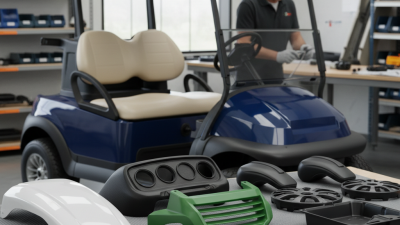
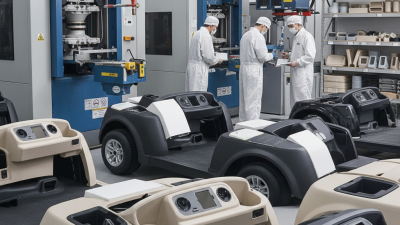
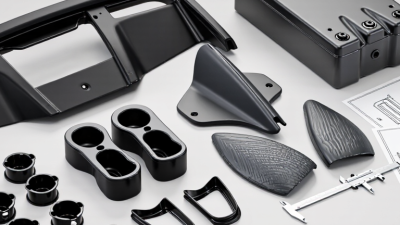
Choosing reliable Golf Cart Parts Molding Services can shape the performance, appearance, and lifespan of every vehicle component. Global buyers need more than attractive samples. They need consistent dimensions, stable materials, clear documentation, and responsive technical support. A molded dashboard, battery cover, fender, or protective trim must fit accurately under real operating conditions. Small errors can create vibration, water entry, or difficult assembly on the production line.
Experienced molding partners begin with the application. They review drawings, resin selection, wall thickness, draft angles, and expected production volume. They also examine how parts face sunlight, impact, moisture, heat, and repeated cleaning. Practical knowledge matters here. A smooth prototype may not reveal warping after thousands of cycles. Proper tooling design, controlled injection parameters, and documented inspections help reduce that risk. Still, no supplier gets every detail right on the first attempt. Responsible teams welcome testing, feedback, and design revisions.
Global sourcing also requires dependable communication. Buyers should expect material certificates, dimensional reports, sample approval records, and traceable quality procedures. Packaging deserves attention too. Scratched panels or deformed clips can weaken an otherwise successful shipment. Strong Golf Cart Parts Molding Services combine engineering experience with transparent production control. They support both custom development and repeat orders without making unsupported promises. The best decision may not be the lowest quoted price. It is the option that protects fit, reliability, delivery stability, and long-term product value. That judgment takes evidence. Not assumptions.
Golf cart parts molding services cover much more than producing plastic shapes. Experienced suppliers review 2D drawings, 3D files, and physical samples before quoting. They check wall thickness, draft angles, ribs, mounting points, and expected load. A battery cover may need reinforced corners, while a dashboard requires clean edges and stable dimensions. These details affect fit, safety, and assembly time.
The service usually includes material selection, mold design, tooling, prototyping, and trial production. Common materials include UV-resistant polymers, impact-resistant compounds, and weather-stable elastomers. Engineers can recommend injection molding, compression molding, or rotational molding based on part size and volume. Mold flow analysis can reveal air traps and uneven filling. It is useful, but not perfect. Real samples still matter.
Quality control may include dimensional checks, surface inspection, color comparison, impact testing, and heat exposure. Suppliers can manage mold maintenance, production scheduling, protective packaging, and export documentation for global buyers. Small details help, such as separating finished panels with soft film to prevent scratches. We have seen a drawing look complete yet miss a drainage path. That mistake can delay assembly and require tooling changes. Reliable service includes clear sampling records, corrective actions, and honest communication when a design needs revision.
Golf cart component molding depends heavily on material selection. Polypropylene is common for dashboards, battery covers, and storage panels because it offers low density, chemical resistance, and reasonable impact strength. ABS provides a cleaner surface finish for instrument housings and control consoles. Polycarbonate is stronger, but its higher cost requires careful design justification. Material choice matters.
PlasticsEurope reported global plastics production at about 413.8 million tonnes in 2023. This scale supports stable resin supply, but it does not guarantee suitable molding performance. Suppliers must verify melt flow, shrinkage, moisture content, and recycled content for every batch. Glass-fiber-reinforced nylon can improve strength around brackets and suspension-related covers. However, excessive fiber loading may increase warpage and mold wear. That trade-off is often underestimated.
A 2024 market report from Fortune Business Insights projected continued growth in the global golf cart market through 2030, driven by leisure facilities, resorts, and low-speed transport applications. This growth increases demand for durable molded parts, not merely attractive surfaces. Thermoplastic elastomers can add grip to handles and protective edges, while UV-stabilized polypropylene helps exterior parts resist sunlight. Mold temperature and cooling balance remain critical. Small process errors become visible as sink marks, uneven gloss, or loose fit. Recycled resin can reduce environmental impact, yet inconsistent batches may complicate color matching and dimensional control. A supplier should document resin certificates, lot numbers, testing results, and dimensional inspections before global shipment. Oversimplifying material selection is still a common mistake.
Typical material densities used when selecting molded golf cart components for durability, weight, impact resistance, and corrosion protection.
Common applications include body panels, dashboards, battery covers, brackets, protective housings, and structural fittings. Density values are representative standard values at room temperature; actual grades and reinforced compounds may vary.
Golf cart parts start with a clear use case, not a decorative sketch. Designers study weight, vibration, weather exposure, and user contact points. They build CAD models around real load paths and mounting positions. A seat base needs stronger ribs than a simple dashboard cover. Small changes matter.
Before tooling, engineers review wall thickness, draft angles, and potential shrinkage. These details help parts release cleanly from the mold. Mold-flow analysis can reveal trapped air, weak corners, or uneven cooling. Designers may adjust gates, vents, and support ribs before cutting steel. This stage saves time, although simulations cannot replace physical testing.
Injection molding requires controlled heat, pressure, and cooling. Material choice depends on impact needs, flexibility, ultraviolet exposure, and expected service life. Operators inspect first-off samples for warping, flash, surface marks, and dimensional accuracy. Critical dimensions receive repeated checks with calibrated tools. For global buyers, reliable production also requires clear drawings, inspection records, packing standards, and traceable batch information.
No design is perfect. A trial mold may expose noise, stress lines, or an awkward assembly fit. Those findings should lead to measured revisions, not rushed approval. Experienced teams compare test results with field conditions because laboratory assumptions can miss daily abuse. A part that looks strong may still fail around a fastener hole.
Top Golf Cart Parts Molding Services for Global Buyers
Quality Standards for Global Golf Cart Parts Buyers
Reliable molding begins with controlled material selection. Parts should match approved resin grades, color limits, and required strength levels. For outdoor golf carts, UV resistance and temperature stability deserve close attention. A part may look perfect indoors, yet become brittle under strong sunlight. That mistake is costly.
Experienced suppliers check mold temperature, injection pressure, cooling time, and cycle consistency. They also inspect critical dimensions with calibrated gauges or coordinate measuring equipment. Warped panels, uneven holes, and sharp edges can create assembly problems. Small details matter. Each production batch should carry traceable records, including material data, inspection results, and operator checks. Clear documentation helps global buyers evaluate quality before shipment.
Practical experience shows that sample approval is not enough. Production conditions can change, especially after mold maintenance or material replacement. Buyers should request first-article samples, tolerance reports, and packaging tests. Protective packaging must prevent scratches, moisture, and deformation during long transport. No process is flawless. A missed measurement can still happen, even with a mature system. Suppliers should investigate the cause, record corrective action, and verify the next batch. Continuous review builds trust more effectively than attractive claims.
Top Golf Cart Parts Molding Services for Global Buyers
How to Select a Reliable Golf Cart Molding Supplier
Selecting a reliable molding supplier starts with technical evidence, not attractive quotations. Ask for material data, mold-flow analysis, dimensional tolerances, and previous production samples. Golf cart parts often face sunlight, vibration, moisture, and repeated impact. The supplier should explain how its chosen resin and additives handle these conditions. Clear answers matter.
Inspect the supplier’s engineering process. Can its team review wall thickness, ribs, draft angles, and fastening points before mold construction? These details reduce warping and difficult assembly. Request a prototype before approving expensive tooling. Measure critical areas with documented inspection methods. A clean sample is useful, but stable repeatability matters more.
Check production reliability beyond the factory floor. The supplier should provide a realistic tooling schedule, packaging plan, and export documents. Ask how it controls color variation between batches. Also confirm who owns the mold and who pays for future maintenance. Written agreements prevent confusion across borders.
Do not rely on certificates alone. Visit the facility remotely or in person, and observe material storage, machine condition, and inspection records. A perfect first sample is uncommon. Small issues may reveal weak communication or rushed engineering. I would rather see an honest correction plan than polished promises. Good suppliers admit limits, record changes, and keep customers informed when production moves off schedule.
| Selection Dimension | Typical Industry Benchmark | Why It Matters for Golf Cart Parts | Recommended Buyer Verification |
|---|---|---|---|
| Suitable Molding Processes | Injection molding for rigid parts; blow molding for hollow tanks and reservoirs; compression molding for selected thermoset or composite components. | Different golf cart components require different levels of strength, surface quality, dimensional control, and production volume. | Request a process recommendation based on part geometry, annual volume, material, and performance requirements. |
| Common Engineering Materials | PP, ABS, PC/ABS, PA, POM, TPE, TPU, HDPE, and glass-fiber-reinforced grades are commonly used in vehicle and outdoor components. | Material selection affects impact resistance, UV performance, chemical resistance, stiffness, weight, and operating temperature. | Check the material technical data sheet, resin grade, certification status, and whether the supplier can provide batch traceability. |
| Dimensional Tolerance | General plastic dimensions commonly require approximately ±0.10 to ±0.30 mm for smaller features, depending on material, size, geometry, and drawing requirements. | Accurate dimensions help ensure correct fit for brackets, dashboards, enclosures, covers, clips, and mounting interfaces. | Provide a 2D drawing with critical dimensions and ask for a formal inspection report from first-article samples. |
| Tooling Design Capability | A production-ready mold should address draft angles, wall thickness, ribs, bosses, shrinkage, cooling, ejection, parting lines, and gate locations. | Good tooling design reduces warpage, sink marks, short shots, flash, visible weld lines, and premature mold wear. | Approve a mold-flow review and a design-for-manufacturing report before steel machining begins. |
| Prototype and Sampling | Initial prototypes may be produced through 3D printing, CNC machining, soft tooling, or pilot injection molding before mass production. | Sampling allows buyers to validate assembly, appearance, ergonomics, fit, and functional performance before committing to volume production. | Confirm sample quantity, revision control, approval criteria, and the process for correcting defects discovered during testing. |
| Mold Development Lead Time | A simple plastic injection mold often requires about 4–8 weeks; complex, large, multi-cavity, or surface-critical tooling may require longer. | A realistic tooling schedule supports launch planning and reduces the risk of rushed design changes or incomplete validation. | Request a milestone plan covering design approval, steel cutting, first trial, correction, final sample, and mold acceptance. |
| Production Capacity | Capacity depends on machine tonnage, mold cavities, cycle time, operating shifts, automation, and available production hours. | Stable capacity is essential for seasonal demand, replacement-part programs, and large global orders. | Ask for machine specifications, estimated cycle time, monthly output, current utilization, and a documented capacity plan. |
| Quality Control System | A controlled process should include incoming material inspection, first-piece approval, in-process checks, final inspection, and nonconformance records. | Consistent inspection reduces variation in fit, appearance, mechanical performance, and packaging quality. | Review inspection procedures, calibration records, control plans, sampling methods, and corrective-action procedures. |
| Testing and Validation | Depending on the application, validation may include dimensional checks, impact testing, UV exposure, chemical resistance, temperature cycling, and assembly testing. | Golf cart parts may face sunlight, moisture, vibration, cleaning chemicals, temperature changes, and repeated handling. | Define test methods, acceptance limits, sample size, laboratory responsibility, and report format before production approval. |
| Surface Finish and Appearance | Available finishes may include polished, textured, matte, grained, painted, coated, or molded-in-color surfaces. | Exterior panels, instrument surrounds, handles, and protective covers require consistent appearance and controlled cosmetic defects. | Use approved color chips, surface standards, defect limits, gloss requirements, and visual inspection lighting conditions. |
| Secondary Operations | Services may include trimming, drilling, tapping, ultrasonic welding, heat staking, pad printing, labeling, painting, and assembly. | Integrated operations can simplify purchasing, reduce handling, and improve control over finished assemblies. | Confirm process capability, tooling responsibility, inspection points, minimum order quantities, and per-part cost for each operation. |
| Tooling Life and Maintenance | Mold life varies widely; steel selection, resin abrasiveness, part complexity, maintenance quality, and production volume are key factors. | Reliable tooling reduces downtime, dimensional drift, unexpected repair costs, and supply interruptions. | Clarify mold ownership, preventive-maintenance intervals, spare-part responsibility, repair approval, and end-of-life policy. |
| Documentation and Traceability | Useful records include material certificates, batch numbers, inspection reports, production dates, mold revision history, and packing records. | Traceability supports warranty investigations, product recalls, repeat orders, and quality improvement. | Request a sample document package and verify how production lots are linked to material and inspection records. |
| Export Packaging | Packaging should protect against impact, dust, moisture, abrasion, deformation, and mixed-part damage during international transport. | Proper packaging helps preserve cosmetic surfaces and prevents dimensional or assembly damage before delivery. | Approve carton strength, inner protection, pallet configuration, labeling, packing quantity, and moisture-control requirements. |
| Commercial Transparency | A complete quotation should separate tooling, part price, secondary operations, packaging, testing, logistics assumptions, and payment terms. | Transparent costing makes supplier comparisons more accurate and reduces unexpected charges during development and production. | Compare at least three itemized quotations using the same drawings, material grade, annual volume, quality requirements, and delivery terms. |
| Communication and Response Time | A dependable project team should provide clear technical feedback, revision tracking, action owners, and regular schedule updates. | Fast, accurate communication helps prevent drawing errors, delayed approvals, and misunderstandings across time zones. | Evaluate the quality of the initial design review, meeting records, response discipline, and escalation process during a trial project. |