
Marine equipment faces salt spray, ultraviolet exposure, vibration, and repeated handling. These conditions make material choice and production consistency important. Marine Equipment Injection Molding can produce housings, brackets, and other components, but a capable supplier must understand how each part will be used. A control-panel enclosure, for example, may need stable dimensions around its seals and connectors. Small defects can cause real trouble. Details matter. A polished sample alone does not prove that every production run will match it. That is easy to overlook.
When comparing suppliers, look beyond the quoted unit price. Ask about engineering support, resin selection, mold design, process controls, and inspection records. Request evidence of experience with parts that face similar exposure, and clarify how the supplier handles tooling maintenance and design changes. Review sample parts against drawings, fit requirements, and the intended assembly process. A supplier’s answers should be specific, not just reassuring. Still, no checklist can replace careful technical review. Discuss expected volumes, lead times, ownership of tooling, and communication during production before making a commitment. These details can reveal gaps early, though they may not make the decision simple. This guide outlines practical criteria for assessing suppliers, asking useful questions, and weighing trade-offs with confidence.
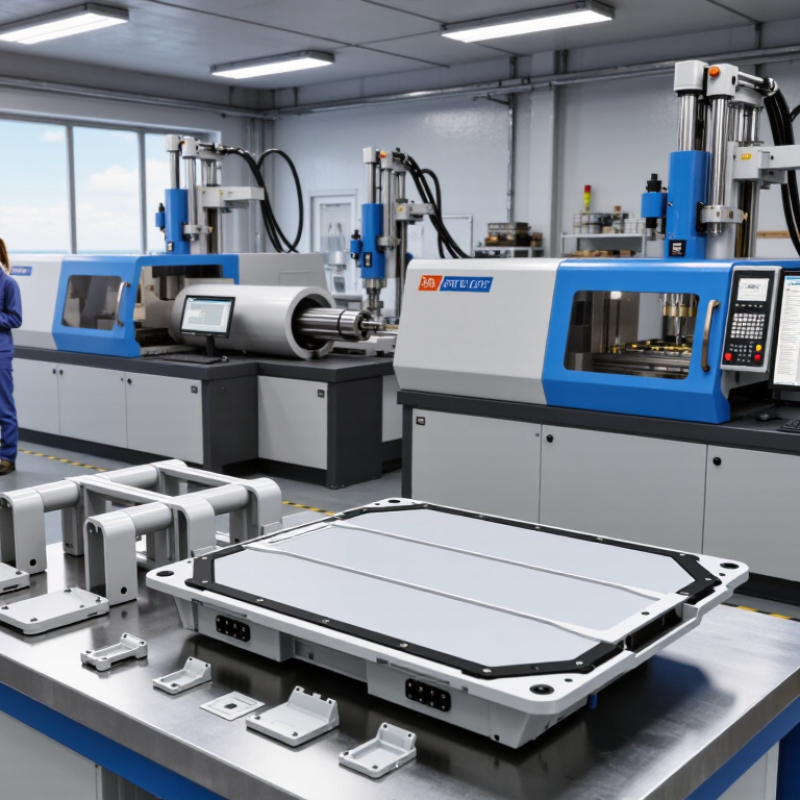
Before contacting an injection molding supplier, document what each marine component must do. A console bezel, cable clip, and pump cover face different demands. Note whether parts sit above deck, inside a cabin, or near bilge water. Record exposure to salt spray, sunlight, fuel residue, cleaning agents, and repeated washing. Include temperature ranges and expected service life. A part that looks dry during inspection may still trap moisture behind a gasket. Small detail, big consequence.
Describe mechanical demands with real use cases, not vague terms like “heavy duty.” State expected vibration, impact, fastening torque, and sustained pressure. Share mating-part drawings, tolerance needs, and areas where water must not pass. If vessels face cold launches or hot storage, include those extremes. Material behavior and fit can change with temperature. Ask the supplier to review material compatibility and make test pieces for UV, saltwater, and chemical exposure. Keep test conditions on record. One easy-to-miss point is splash direction; water may reach a component from below or through a narrow gap. Requirements are rarely perfect at the start, so field feedback may reveal an overlooked exposure.
| Requirement Area | Example Marine Equipment Requirement | Operating Conditions to Define | What to Confirm with the Supplier |
|---|---|---|---|
| Part function | Protective enclosure for a deck-mounted electrical instrument | Exposed deck, sheltered cabin, or below-deck installation; expected service life and maintenance access | Can the supplier review the part’s function, interfaces, assembly method, and failure consequences before recommending a molding approach? |
| Water and salt exposure | Housing or fitting exposed to spray and occasional immersion | Fresh water, seawater, salt spray, splash, or continuous immersion; specify exposure duration and cleaning practices | Ask for material compatibility data and test plans relevant to the actual exposure. Define sealing interfaces separately; a molded part alone does not establish an enclosure’s ingress rating. |
| Temperature range | Control-panel cover near equipment that warms during operation | Minimum storage temperature, maximum ambient temperature, part temperature in service, and temperature cycling | Confirm that the proposed resin’s documented service-temperature range covers the use case, including load, exposure time, and dimensional requirements. |
| Sunlight and weathering | Exterior trim, covers, or cable-management components | Direct sunlight, UV exposure, heat, rain, and repeated wet-dry cycles | Discuss UV-stabilized material options and request applicable weathering test information. Check whether color, impact strength, and appearance must be retained over time. |
| Chemical contact | Pump cover or service-access component near fuels, oils, or cleaning agents | Name each fluid, concentration if applicable, contact temperature, exposure frequency, and whether contact is a splash or continuous | Have the supplier assess chemical compatibility for the selected resin and molded-part stress state; verify with testing when failure would affect safety or operation. |
| Mechanical loads and impact | Bracket, guard, latch, or enclosure exposed to handling and vibration | Static loads, impact direction, vibration, fastening loads, and expected cycle count | Share load cases and mounting details. Confirm that part geometry, wall thickness, ribs, and fastening features can be evaluated for strength and fatigue risk. |
| Fit and dimensional control | Molded panel that mates with a gasket, insert, or neighboring component | Critical dimensions, assembly clearance, gasket compression, and dimensional change with temperature or moisture | Identify critical-to-function dimensions on the drawing. Ask how the supplier accounts for shrinkage, warpage, process variation, and inspection capability. |
| Material and compliance needs | Interior or exterior molded component with defined flammability or documentation needs | Installation location, applicable vessel or project requirements, and any required material declarations or test reports | Specify required standards and documentation rather than assuming they apply. Confirm material grade, traceability, and availability of supporting records. |
| Molded-in features and assembly | Part with bosses, clips, threads, inserts, or snap-fit features | Assembly tools, installation access, repeated removal, and possible galvanic or corrosion concerns at metal interfaces | Review draft, undercuts, insert retention, and assembly sequence during design-for-manufacture. Define inspection for inserts and critical molded features. |
| Production and quality validation | Low-volume prototype followed by repeat production of a service component | Expected annual volume, batch size, demand variability, inspection needs, and replacement-part support period | Agree on prototype and production validation, sampling and inspection records, change control, tooling maintenance, and a process for addressing nonconforming parts. |