Why Choose Plastic Injection Molding for Motorcycle Parts?
In the world of motorcycle manufacturing, precision and durability are paramount. One method that consistently stands out is plastic injection molding. This process is not only efficient, but it also delivers high-quality results, especially for motorcycle parts. When discussing Plastic Injection Molding Motorcycle Parts, it is crucial to recognize its advantages.
The injection molding technique allows manufacturers to create complex shapes with exact specifications. This accuracy ensures that each part fits perfectly, which is essential for safety and performance. Additionally, the materials used are often lightweight, which can enhance the overall speed and fuel efficiency of the motorcycle. However, challenges do exist. Not every design translates seamlessly into molded parts. Some parts may require multiple iterations before achieving optimal results.
Ultimately, choosing plastic injection molding for motorcycle components can lead to innovative designs. It balances cost, performance, and durability. Yet, ongoing evaluation of design choices and material selection is necessary. As technology continues to evolve, the approach to manufacturing must adapt accordingly. This adaptability is key for maintaining a competitive edge in the motorcycle industry.
Advantages of Plastic Injection Molding in Motorcycle Manufacturing
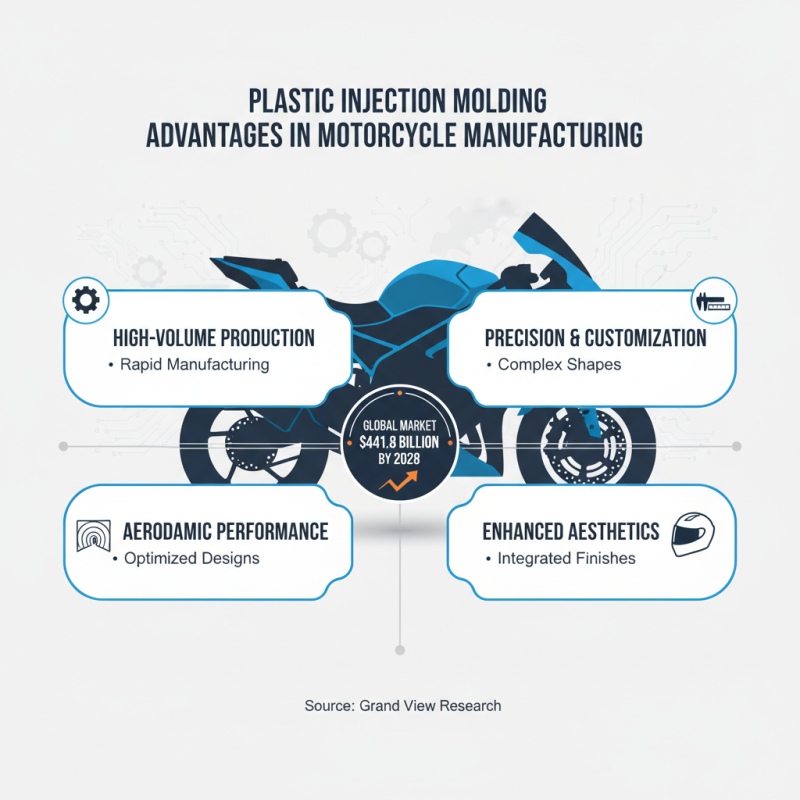
When it comes to motorcycle manufacturing, plastic injection molding stands out for its numerous advantages. According to an industry report by Grand View Research, the global plastic injection molding market is projected to reach $441.8 billion by 2028, demonstrating its growing importance. This process allows for high-volume production with remarkable precision. Parts can be designed to fit specific needs, ensuring better aerodynamic performance and aesthetics.
Plastic injection molding also enhances durability while keeping costs down. Statista notes that plastic components can weigh up to 50% less than their metal counterparts, contributing to improved fuel efficiency. Lightweight parts are essential in the competitive motorcycle industry, leading to better performance and rider experience. Moreover, the flexibility in design encourages innovative features that attract consumers.
Tips: Always consider the lifecycle of materials. While plastic is lightweight, its environmental impact is noteworthy. Recycling options for used parts can enhance sustainability.
Quality control is crucial in manufacturing. Inconsistent molding can lead to defects. Regular checks throughout the production process can mitigate this risk and ensure customer satisfaction. Embracing continuous improvement methodologies will help manufacturers refine their processes over time.
Key Materials Used in Plastic Injection Molding for Motorcycle Parts
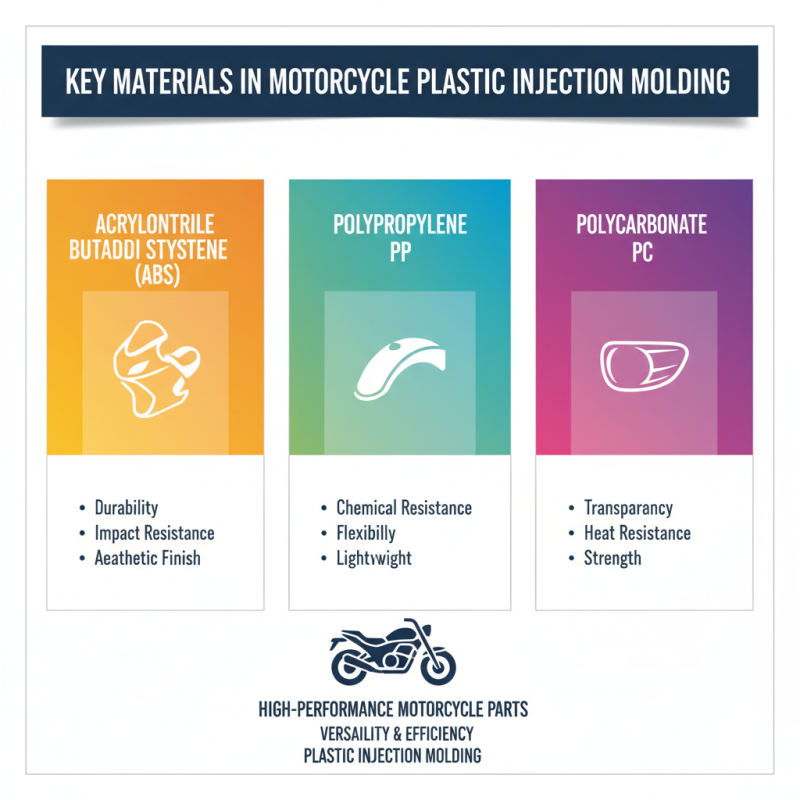
Plastic injection molding is an optimal choice for manufacturing motorcycle parts due to its versatility and efficiency. The key materials utilized in this process include acrylonitrile butadiene styrene (ABS), polypropylene (PP), and polycarbonate (PC). These materials offer unique properties that align well with the demands of high-performance motorcycles.
ABS is well-regarded for its strength and resilience, making it ideal for parts that must endure high stress. According to a 2022 industry report, motorcycle manufacturers increasingly prefer ABS due to its excellent impact resistance. On the other hand, polypropylene is lauded for its lightweight nature and corrosion resistance. This material contributes to overall fuel efficiency, a crucial metric in the motorcycle sector today. In fact, data suggests a shift towards lighter materials can improve energy efficiency by up to 10%, appealing to eco-conscious consumers.
Polycarbonate is another significant material used in motorcycle parts, known for its high transparency and durability. However, its higher cost can be a reflection for manufacturers. There are trade-offs in strength and weight that require careful consideration. While these materials enhance performance, they also introduce challenges in balancing cost-effectiveness with quality. Integrating these materials demands expertise and innovation to ensure motorcycles not only perform well but are also cost-efficient to produce.
The Injection Molding Process: A Step-by-Step Overview
The injection molding process is vital in manufacturing motorcycle parts. It begins with material preparation, where thermoplastics and elastomers are pre-heated and mixed to achieve a uniform consistency. This is critical, as a study by Plastics Industry Association noted that the right materials significantly impact the end strength and durability of the parts produced.
Next, the heated materials are injected into a mold. The quality of the mold is essential, as it determines the precision of the parts. Typical cycle times for this process are around 15 to 30 seconds, depending on the part's complexity. A research report by MarketsandMarkets suggests that improving cycle time by even 10% can lead to substantial cost savings, making the process more efficient.
After cooling, the parts are ejected from the mold. Though robust, this stage often requires fine-tuning to minimize defects. Common issues include warping or incomplete fills, which can compromise part integrity. Addressing these challenges involves continuous monitoring and adjustments, reflecting an ongoing commitment to quality in the manufacturing process. Each cycle presents an opportunity for enhancement, urging manufacturers to innovate while ensuring the final products meet stringent industry standards.
Why Choose Plastic Injection Molding for Motorcycle Parts?
| Feature |
Description |
Benefits |
| Material Versatility |
Injection molding allows the use of various thermoplastics and thermosets. |
Wide range of mechanical properties and designs. |
| Precision Manufacturing |
High precision and repeatability in production. |
Consistent quality across large production runs. |
| Cost-Effectiveness |
High initial cost but low per-unit cost at scale. |
Ideal for large quantity production, reducing overall costs. |
| Design Flexibility |
Complex geometries can be manufactured easily. |
Ability to create intricate designs and features. |
| Short Lead Time |
Faster molding cycle times compared to traditional methods. |
Quick turnaround for prototypes and large orders. |
| Sustainability |
Recyclability of thermoplastics and reduced waste. |
Environmental friendliness in the production process. |
Applications of Plastic Injection Molding in Motorcycle Component Design
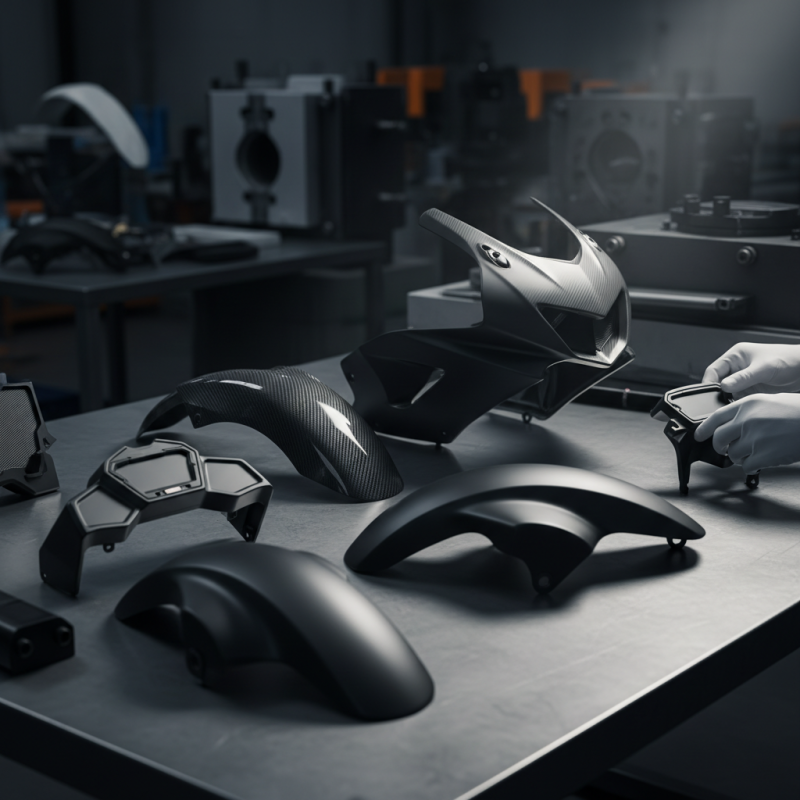
Plastic injection molding plays a vital role in motorcycle component design. It provides manufacturers with an efficient method to produce high-quality parts. The process allows for complex geometries and precise dimensions, essential for modern motorcycles. Parts such as body panels, control knobs, and even fuel tanks can benefit from this technology. Each piece is crafted with accuracy, ensuring a better fit and performance.
Using this method can also reduce weight and increase fuel efficiency. Lighter components lead to improved handling and better overall performance. However, not all designs translate perfectly to plastic. Some components may require metal for structural integrity. This can pose a challenge for designers. They must balance the benefits of plastic with its limitations, often leading to numerous revisions.
Costs can vary widely based on design complexity and required material. While plastic components can be economical in mass production, initial molds can be expensive. This factor can discourage smaller manufacturers. Still, for larger production runs, the savings in material costs and assembly time become significant. Every designer should evaluate these trade-offs carefully when considering plastic injection molding for motorcycle parts.
Cost Efficiency and Production Speed of Injection Molded Parts
Plastic injection molding has become a preferred method for manufacturing motorcycle parts due to its cost efficiency and rapid production speed. The process allows manufacturers to create complex shapes with precision, maximizing material use and minimizing waste. With injection molding, high-volume production becomes feasible, enabling the production of thousands of identical parts in a short timeframe.
Another advantage of injection molding is its capability to reduce labor costs. Once the mold is created, the parts can be produced with minimal human intervention. This not only accelerates production but also reduces the likelihood of errors, resulting in greater consistency across manufactured parts. However, there are challenges to consider. The initial investment in mold creation can be significant, which might deter small manufacturers. It’s essential to weigh these upfront costs against long-term savings.
Additionally, material limitations exist. Not all plastics are suitable for every motorcycle component. Some parts may require more durable materials, and not all plastics can withstand high temperatures or stress. This necessitates careful material selection based on the part's intended use. Striking a balance between cost and performance can lead to necessary compromises, which should be acknowledged to ensure overall product quality.