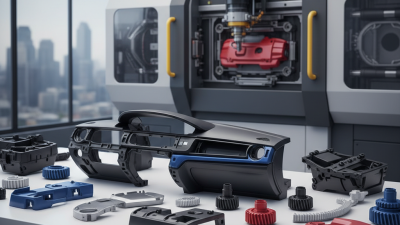
7 Best Automotive Exterior Injection Molding Manufacturers
Choosing among the 7 Best Automotive Exterior Injection Molding Manufacturers requires more than comparing production capacity or polished websites. Exterior parts must withstand sunlight, road debris, temperature changes, pressure washing, and repeated assembly. A reliable supplier understands these conditions before the first tool is cut.
This guide evaluates manufacturers through practical evidence, including tooling experience, material knowledge, dimensional control, surface consistency, and production traceability. It also considers whether a company can support design reviews, mold-flow analysis, prototype validation, and stable high-volume manufacturing. These capabilities help a supplier serve as an Automotive Exterior Injection Plastic Part Molding Manufacturer, rather than simply operating injection machines.
Look closely at the details.
Strong candidates should demonstrate experience with bumper components, grilles, mirror housings, fender elements, trims, and other visible polymer parts. Their processes should address warpage, sink marks, weld lines, paint adhesion, and color variation. Certifications such as IATF 16949 and ISO 9001 can support confidence, but certificates alone do not guarantee dependable results. Real production records matter more.
The final selection still requires careful judgment. A manufacturer may excel at complex molds but lack responsive engineering support. Another may offer competitive pricing but limited secondary finishing capacity. This guide highlights both strengths and possible gaps, because no supplier fits every vehicle program perfectly. Readers should verify current equipment, inspection methods, sustainability practices, tooling ownership, lead times, and customer references before making a commercial decision.
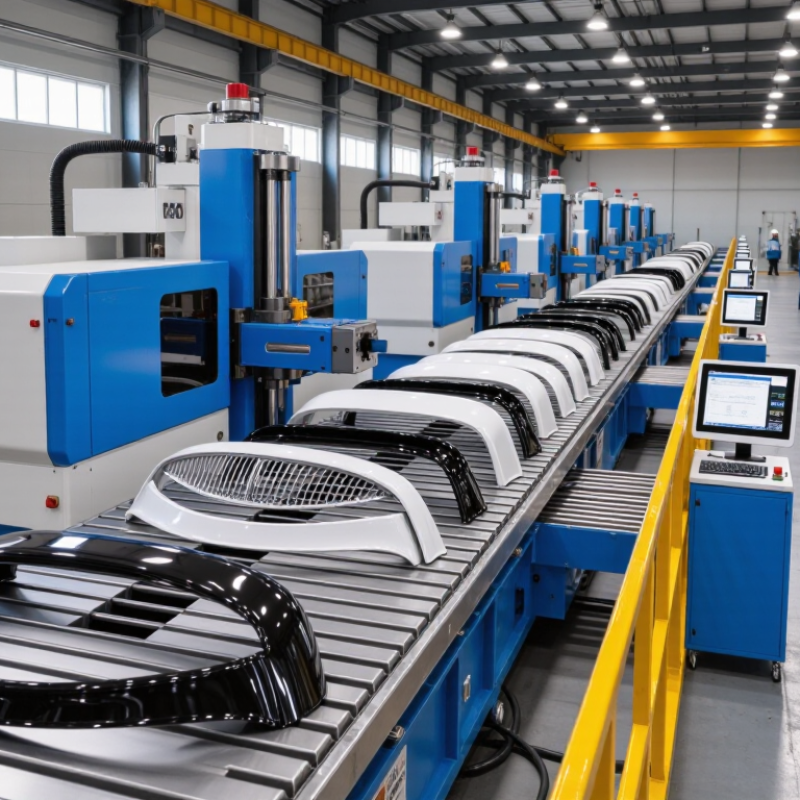
Automotive Exterior Injection Molding: Materials, Processes, and Market Scope
Automotive exterior injection molding depends on material choice, tooling accuracy, and climate exposure. Polypropylene suits bumper fascia because it is light, flexible, and cost-efficient. TPO offers improved impact resistance and surface quality. ABS and PC/ABS work well for grilles, mirror housings, and trim components. Each resin needs UV stabilizers, precise shrinkage data, and suitable color control.
Injection molding begins with mold-flow analysis and careful gate placement.
Engineers examine weld lines, air traps, warpage, and cooling balance before steel cutting. Gas-assisted molding can reduce weight in larger parts. Texturing may hide minor surface defects, but it cannot fix poor process control. In production reviews, small temperature changes often affect gloss, fit, and panel gaps. A perfect surface is rarely achieved on the first trial.
Tips:
Compare suppliers through sample parts, dimensional reports, and process records. Ask how they validate impact strength, UV aging, paint adhesion, and low-temperature performance. The market is expanding through electric vehicles, lightweight structures, recycled-content targets, and regional production. However, recycled materials may change color or stiffness. That trade-off deserves testing, not assumptions. Manufacturers with strong tooling experience and documented quality systems usually manage these risks more reliably.
Seven Leading Manufacturers Serving Global OEM and Tier-1 Supply Chains
Seven leading automotive exterior injection molding manufacturers support global OEM and Tier-1 supply chains through disciplined engineering, stable production, and regional service. Their products include bumpers, grilles, fenders, mirror housings, spoilers, and underbody shields. Surface quality matters as much as dimensional accuracy.
One manufacturer focuses on large bumper systems and robotic painting. Another develops lightweight fenders using reinforced polymers. A third specializes in exterior parts with integrated sensors and lighting. One supplies high-volume grille programs with tight cycle control.
Another supports electric vehicle platforms and low-temperature impact testing. A sixth combines tooling design with in-house mold maintenance. The seventh concentrates on recycled-content materials and process traceability.
These suppliers typically manage mold-flow analysis, resin validation, first-off inspection, and production capability studies. Their teams monitor warpage near mounting points, weld lines around apertures, and gloss variation across visible panels. Small defects become expensive after assembly. Practical audits should review cavity balance, change-control records, and delivery recovery plans. Ask for measured evidence, not polished presentations. Results can vary between plants.
Experience shows that global coverage does not always guarantee local responsiveness. A supplier may meet technical targets yet struggle with urgent engineering changes. That weakness deserves attention. Strong partners communicate early, document deviations, and protect part consistency across multiple sites. Tier-1 buyers should also examine workforce training, testing equipment, and long-term material availability before awarding exterior programs.
Evaluation Criteria: IATF 16949, ISO 14001, Tolerance, and Tooling Capacity
Choosing among the 7 best automotive exterior injection molding manufacturers requires more than comparing equipment lists. IATF 16949 shows whether a supplier controls automotive quality through traceability, audits, and corrective action. ISO 14001 indicates structured environmental management, including waste, energy, and process controls. Certificates matter, but current audit results matter more.
Tolerance should match the part’s function. A grille, mirror housing, or bumper component may need stable dimensions across temperature changes. Ask for CMM reports, capability data, and examples of warpage control. Tooling capacity also deserves close inspection.
Review mold steel selection, cooling design, simulation practice, maintenance records, and the number of available presses. Large tooling capacity means little if engineers cannot manage complex textures and uneven wall thickness.
Tips: Request a sample quality package before approval. Check one real project, not only a presentation. Confirm how the team handles late design changes, cosmetic defects, and tool repair. Experienced engineers should explain these points clearly.
A practical evaluation should include production trials. Inspect the molded part under bright, angled light. Measure critical points at several temperatures when possible. IATF 16949 supports disciplined production, yet it cannot replace skilled operators. ISO 14001 supports responsible processes, but it does not guarantee low scrap. I still question suppliers that promise perfect tolerance without discussing material shrinkage. Real projects are rarely that clean.
Manufacturer Comparison by Annual Output, Press Tonnage, and Global Facilities
The 7 Best Automotive Exterior Injection Molding Manufacturers should be compared through measurable production capability. Annual output reveals whether a supplier can support high-volume bumper, grille, mirror, and trim programs. Reported figures often range from 20,000 to more than 100,000 tons of molded parts yearly. However, capacity is not the same as delivered output. Utilization rates, tooling changes, and seasonal demand can distort direct comparisons.
Press tonnage shows how effectively a manufacturer handles large exterior components. Facilities with 1,000 to 4,000 tons can mold broad fascia panels with stable clamping force. Smaller presses remain valuable for spoilers, lamp bezels, and modular trim. Ask for evidence, not impressive numbers. A machine list alone cannot confirm dimensional control, cycle time, or surface quality. Real production samples, inspection records, and mold-maintenance logs provide stronger evidence.
Global facilities add resilience when programs cross continents. A capable supplier may operate plants in Asia, Europe, North America, or regional assembly zones. This structure can shorten transport routes and support local engineering changes. Yet more facilities also create communication gaps. Different plants may use different resin controls, inspection methods, or launch procedures. Compare output by plant, available tonnage, warehouse capacity, and technical staffing. Factory visits can reveal details that brochures miss, such as resin drying discipline, automated part handling, and storage conditions near finished panels. Numbers matter. Context matters more.
7 Best Automotive Exterior Injection Molding Manufacturers
Manufacturer Comparison by Annual Output, Press Tonnage, and Global Facilities
The chart compares seven anonymized manufacturer profiles using rounded benchmark figures from publicly disclosed automotive plastics capacity, molding-equipment specifications, and global production-footprint information. Annual output is shown in millions of exterior components, press tonnage represents the largest reported injection-molding capacity, and global facilities include manufacturing locations serving automotive customers.
Exterior Applications: Bumpers, Grilles, Fenders, Trims, and Mirror Housings
Selecting the 7 best automotive exterior injection molding manufacturers requires more than comparing hourly rates. Look for proven experience with bumpers, grilles, fenders, trims, and mirror housings. These parts face stone impact, sunlight, moisture, vibration, and demanding cosmetic standards.
A capable manufacturer should explain resin selection, mold-flow analysis, cooling design, and warpage control clearly. For bumpers and fenders, balanced filling and strong ribs help protect large, visible surfaces. Grilles and mirror housings need accurate clips, stable dimensions, and clean textured finishes. Exterior trim often demands consistent gloss and reliable attachment points.
Request sample records, dimensional reports, material certificates, and photographs of comparable tooling. Experienced teams inspect first articles with gauges and coordinate design changes before production expands. UV resistance, impact testing, and thermal cycling should match the vehicle’s expected environment.
Traceability also matters, especially when several molds or material batches are involved. No supplier gets every detail right. A small sink mark can become a costly rejection. That possibility deserves honest discussion.
Tips:
Confirm the resin grade and surface standard before mold construction. Review parting lines, ejector marks, clip strength, and paint compatibility. Ask how the supplier controls shrinkage across large panels. Keep approved samples for future comparison. A perfect first sample is uncommon, so allow room for measured improvement.