Leave Your Message

2026 Best Motorcycle Plastic Injection Molding Suppliers?

Choosing a reliable supplier for Motorcycle Plastic Injection Molding requires more than comparing online prices. In 2026, manufacturers must assess tooling expertise, material control, production capacity, and quality consistency. A polished website is not enough.

This guide introduces leading suppliers through practical evaluation criteria. We consider mold design experience, resin selection, dimensional accuracy, surface finishing, and delivery performance. Motorcycle parts face vibration, UV exposure, heat, and repeated impact. Fairings, mudguards, battery covers, and dashboard housings need different engineering solutions. A supplier should explain these differences clearly.

Look for evidence, not promises.

Useful evidence includes factory audits, sample inspections, test reports, and traceable production records. ISO certifications can support credibility, but they should not replace direct technical questions. Ask how a supplier controls warpage, weld lines, sink marks, and color variation. Request photographs of comparable components, not only attractive product images. Experienced teams can also discuss mold-flow analysis, cooling-channel design, cycle times, and repair planning.

No ranking is permanently perfect. Supplier capabilities change with equipment, staffing, and workload. Some companies excel at high-volume fairings but struggle with smaller precision parts. Others offer excellent prototypes yet lack stable mass-production systems. This guide therefore balances expertise with realistic limitations. It focuses on suppliers that communicate clearly, document their processes, and respond responsibly when defects occur. The goal is not to identify the cheapest factory. It is to find a dependable manufacturing partner for safe, durable, and repeatable motorcycle components.
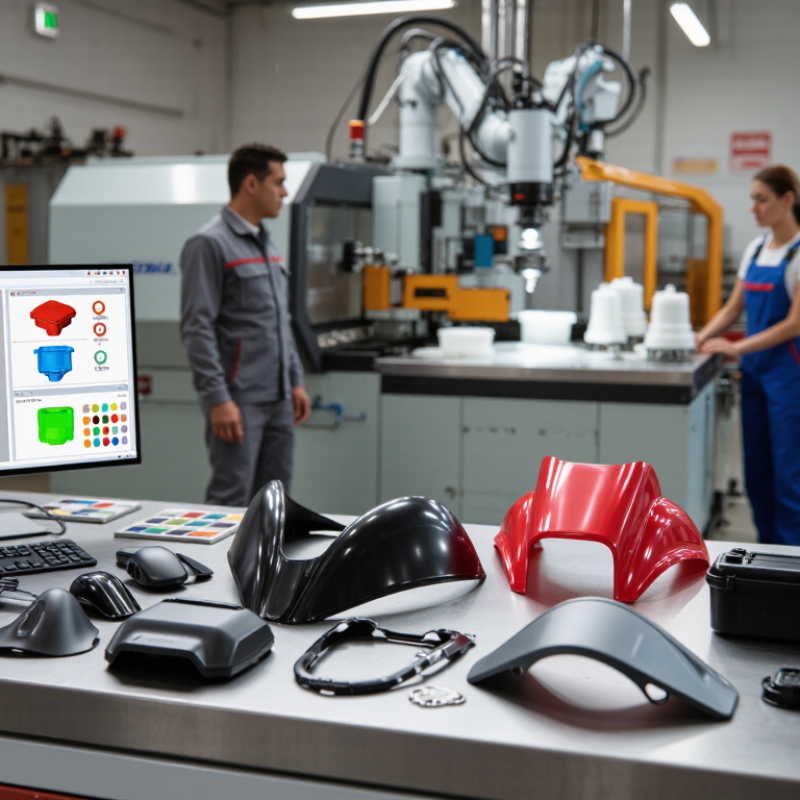
2026 Best Motorcycle Plastic Injection Molding Suppliers?

2026 Best Motorcycle Plastic Injection Molding Suppliers

In 2026, the best motorcycle plastic injection molding suppliers should combine stable production with practical engineering support. Fortune Business Insights valued the global motorcycle market at about USD 106.5 billion in 2023, showing strong demand for durable, lightweight components. This growth increases pressure on suppliers to control part quality, tooling costs, and delivery schedules.

Look for suppliers with experience in fairings, fenders, battery covers, air ducts, and protective housings. Their molding machines should support repeatable pressure, temperature, and cycle-time control. Resin traceability matters. So does mold-flow analysis. Suppliers following ISO 9001-based quality systems can provide clearer inspection records and corrective-action procedures. The International Organization for Standardization identifies process consistency as a core quality principle.

Ask for actual production evidence, not only a polished capability sheet. Useful evidence includes dimensional reports, first-article samples, warpage data, and records from environmental testing. A supplier should explain how it handles sink marks, weld lines, flash, and color variation. Small defects become obvious under sunlight. They can also weaken mounting points.

Cost remains important, but the lowest quotation can hide unstable tooling or excessive scrap. The Plastics Industry Association reports that plastics manufacturing depends heavily on efficient material use and process control. I would compare total project cost over twelve months. A perfect supplier scorecard is unrealistic. Human errors still happen, and some published delivery promises need verification. Speaking with current engineering customers may reveal more than a sales presentation.

Key Criteria for Evaluating Motorcycle Plastic Molding Suppliers

2026 Best Motorcycle Plastic Injection Molding Suppliers?

Choosing a motorcycle plastic molding supplier requires more than comparing unit prices. PlasticsEurope’s Plastics—The Fast Facts 2024 reports 400.3 million tonnes of global plastics production in 2022. That scale makes material traceability essential. Ask for resin certificates, batch records, and controlled storage conditions. A reliable supplier should explain shrinkage, warpage, and cooling decisions in practical terms.

Mordor Intelligence estimates the automotive plastics market exceeded USD 50 billion in 2024. This growth increases supplier competition, but capacity claims need evidence. Review machine tonnage, mold maintenance records, cycle-time studies, and backup equipment. Check whether the supplier can maintain tight dimensions across changing production shifts. Request inspection data from actual motorcycle components, not only sample parts. First-hand experience with clips, covers, ducts, and textured panels matters.

Quality systems should include documented process controls, corrective-action reports, and traceable final inspections. ISO 9001 certification helps, but it does not replace an on-site audit. I would also examine impact testing, heat aging, vibration resistance, and surface consistency. A perfect audit score can still hide weak communication. Ask how the supplier handles late engineering changes. Sustainability deserves evidence too, including recycled-content verification and measurable scrap reduction. Promises without records are not enough.

2026 Best Motorcycle Plastic Injection Molding Suppliers?

Key Criteria for Evaluating Motorcycle Plastic Molding Suppliers

This procurement benchmark assigns practical evaluation weights to the main factors used when selecting a motorcycle plastic injection molding supplier. Quality systems, dimensional capability, delivery reliability, tooling expertise, material traceability, cost control, and sustainability compliance should be verified through audits, production samples, and documented performance records.

Leading Suppliers and Their Motorcycle Component Capabilities

Choosing a motorcycle plastic injection molding supplier in 2026 requires more than comparing unit prices. The strongest suppliers show practical experience with vibration, heat, moisture, and repeated assembly. They should produce fairings, fenders, airbox covers, battery housings, instrument bezels, and protective clips. Each component needs a different balance of stiffness, impact resistance, surface quality, and weight. Material knowledge matters. Suitable options may include PP, ABS, PC/ABS, PA, and glass-filled grades. A capable supplier explains why a material fits the riding environment.

Look for in-house tooling support, mold-flow analysis, and stable process control. Precision suppliers monitor injection pressure, cooling time, shrinkage, and warpage. They should also manage insert molding, overmolding, ultrasonic welding, and automated inspection when required. Ask for dimensional reports, material certificates, sample records, and traceability documents. These details make quality claims easier to verify. Production trials should test mounting points, snap fits, screw bosses, and textured surfaces. Small failures become expensive quickly.

Supplier audits should include tool maintenance, operator training, storage conditions, and corrective-action speed. A polished presentation proves little. Real evidence matters more. Some suppliers appear technically strong but struggle with design changes or late tooling feedback. That risk deserves honest discussion. Engineers should review CAD files, tolerances, and assembly samples together. No evaluation is perfect. A useful partnership leaves room for pilot runs, measured improvements, and uncomfortable questions before mass production begins.

2026 Best Motorcycle Plastic Injection Molding Suppliers? - Leading Suppliers and Their Motorcycle Component Capabilities

Supplier Profile Primary Manufacturing Region Motorcycle Components Supported Typical Injection Machine Range Suitable Thermoplastics Maximum Practical Part Size Typical Dimensional Tolerance Tooling Capability Surface Finishes Quality and Compliance Coverage Best-Fit Project Type
Supplier Profile 01 East Asia Fairings, front fenders, side covers, tail sections, battery covers and air-box housings 180–1,600 tonnes ABS, PC/ABS, polypropylene, nylon, PBT and reinforced engineering plastics Up to approximately 1,200 × 800 mm for large exterior panels Generally ±0.10–0.30 mm, depending on material, geometry and measurement location Single-cavity and multi-cavity molds; hot-runner and cold-runner designs; Moldflow analysis available Texture etching, high gloss, matte, paint-ready, polishing and in-mold color In-process inspection, CMM measurement, mold trials, first-article approval and traceability records High-volume exterior parts and complete motorcycle body-panel programs
Supplier Profile 02 South Asia Instrument panels, switch housings, handlebar covers, indicator housings and control enclosures 80–650 tonnes ABS, PC, PC/ABS, nylon, POM and flame-retardant grades where required Up to approximately 500 × 400 mm Generally ±0.08–0.20 mm for functional features and assembly interfaces Precision inserts, interchangeable cores, sliders, lifters and family-mold development Fine texture, matte, gloss, laser-marking-ready and decorative-film-ready surfaces Dimensional inspection, assembly checks, functional testing and material documentation Electronic-control housings and medium-sized cockpit components
Supplier Profile 03 Central Europe Structural brackets, chain guards, frame covers, mounting components and safety-related plastic supports 120–1,000 tonnes Glass-fiber-reinforced nylon, PBT, PPS, polypropylene and impact-modified engineering polymers Up to approximately 900 × 650 mm Generally ±0.05–0.20 mm for critical mounting and locating features Steel tooling for long production life; conformal cooling considered for demanding cycle-time targets Technical matte, molded texture, low-gloss and machining-ready surfaces Material-lot traceability, capability studies, gauge calibration and process-control plans Functional and load-bearing plastic components requiring repeatable tolerances
Supplier Profile 04 North America Low-volume fairings, replacement panels, aftermarket accessories, luggage components and prototypes 90–850 tonnes ABS, polypropylene, polycarbonate, nylon and recycled-content thermoplastics when validated Up to approximately 1,000 × 700 mm Generally ±0.15–0.35 mm for molded cosmetic components Prototype molds, bridge tooling, aluminum tooling and production steel molds Textured, polished, painted, water-transfer-ready and post-machined finishes First-article inspection, fit checks, material certificates and change-control procedures Aftermarket products, service parts and launch programs with moderate volumes
Supplier Profile 05 Southeast Asia Fenders, mudguards, under-seat covers, chain covers, footwell panels and utility boxes 160–1,200 tonnes Polypropylene, impact-modified polypropylene, ABS, HDPE and glass-filled nylon Up to approximately 1,100 × 750 mm Generally ±0.12–0.30 mm, with tighter control on mounting holes and clips Large-part molds, gas-assist feasibility studies, hot-runner systems and automated ejection Grain texture, matte, low-gloss, molded-in color and paint-ready surfaces Visual standards, warpage checks, cycle monitoring and batch-level inspection reports High-volume utility parts requiring impact resistance and cost control
Supplier Profile 06 East Asia LED lamp housings, reflector surrounds, rear-lamp bodies, sensor covers and small optical components 50–450 tonnes Optical-grade polycarbonate, PMMA, ABS, PC/ABS and heat-resistant PBT Up to approximately 350 × 300 mm Generally ±0.03–0.12 mm for optical, sealing and snap-fit features Precision tooling, polished optical inserts, tight parting-line control and micro-feature machining Optical polish, fine texture, high gloss and light-blocking surface treatment Light-transmission testing, leak checks, dimensional inspection and appearance standards Lighting and sensor-related components with demanding cosmetic requirements
Supplier Profile 07 Western Europe Fuel-system covers, thermal shields, air-intake components, fluid reservoirs and underbody protection 100–900 tonnes High-temperature nylon, PBT, PPS, polypropylene, polyethylene and chemical-resistant grades Up to approximately 750 × 550 mm Generally ±0.05–0.20 mm for sealing, connection and mounting interfaces Multi-slide tooling, insert molding, overmolding and leak-critical mold design Technical texture, matte, chemical-resistant coating-ready and molded-in color Leak testing, thermal aging evaluation, chemical-resistance validation and process audits Components exposed to heat, fuel, oil, vibration or aggressive operating environments
Supplier Profile 08 Eastern Europe Seat bases, grab handles, luggage racks covers, protective guards and interior trim components 100–750 tonnes Polypropylene, ABS, PC/ABS, TPE, TPU and glass-fiber-reinforced polymers Up to approximately 700 × 500 mm Generally ±0.10–0.25 mm for assembly and fastening features Insert molding, two-shot molding, overmolding and automated trimming support Soft-touch, grained, matte, polished and molded-in color finishes Assembly validation, hardness testing for elastomers, visual inspection and PPAP-style documentation Comfort, trim and protective parts combining rigid and flexible materials

Technical values are typical industry ranges for motorcycle injection-molded components. Final capability depends on part geometry, resin grade, mold design, tooling condition, process validation and the required production volume.

Comparing Materials, Technologies, Quality, and Production Capacity

Materials should match the motorcycle part, not merely the lowest quotation. Polypropylene suits lightweight inner panels and fenders. ABS offers a clean surface for visible trim. PC-ABS improves impact resistance near exposed areas. Glass-filled nylon supports brackets, but it may increase warpage and tool wear. Suppliers should provide resin certificates, drying records, and UV-resistance data. Small details matter.

Modern injection molding depends on controlled process windows. Mold-flow analysis can predict weld lines, sink marks, and uneven filling before steel is cut. Hot-runner systems may reduce runner waste, while robotic trimming improves repeatability. For textured fairings, stable mold temperature prevents gloss variation. I would still request physical samples. Software does not catch every defect.

Quality systems need measurable evidence. Inspectors should check critical dimensions with gauges or CMM equipment. Color panels, impact tests, and assembly trials reveal problems that visual checks miss. Ask for cavity identification and batch traceability. Production capacity requires more than a large machine list. Review press tonnage, cavity count, cycle time, mold maintenance, and backup equipment. A supplier producing 20,000 parts weekly may struggle during seasonal demand. Capacity claims need production records.

One concern is often overlooked: the “perfect” sample may come from excessive manual adjustment. That process can fail during mass production. A practical audit should compare samples from different shifts and machines. Minor variation is sometimes acceptable, but undocumented variation is risky. Good suppliers explain weaknesses clearly, then show how they control them.

How to Select the Right Supplier for Your Motorcycle Project

Choosing a motorcycle plastic injection molding supplier requires more than comparing unit prices. Inspect its experience with fairings, battery covers, instrument panels, and other vibration-exposed parts. Ask for project examples, material recommendations, and dimensional inspection records. A capable supplier should explain shrinkage, wall thickness, draft angles, and mold cooling in practical terms.

Visit the facility if possible. Observe resin storage, molding machines, mold maintenance, and final inspection areas. Check whether the supplier uses documented procedures for incoming materials, first-article approval, and batch traceability. Request samples from a similar project, then test fit, surface finish, impact resistance, and heat performance. Do not accept attractive samples without production evidence. Small details matter.

Tips: Confirm mold ownership, repair responsibilities, lead times, and backup capacity in writing. Compare the complete cost, including tooling changes, packaging, inspections, and freight. Ask how engineering changes are handled after approval. Communication is another quality signal; delayed or vague answers can become costly later. A perfect supplier scorecard is unrealistic. I have seen technically strong suppliers miss deadlines, while responsive teams needed more engineering guidance. Review both weaknesses honestly. Choose the supplier whose risks your project can manage.