Leave Your Message

7 Best Automotive Injection Molding Suppliers Worldwide

Automotive Injection Molding is becoming more important as vehicles become lighter, smarter, and increasingly electric. The International Energy Agency’s Global EV Outlook 2025 reported more than 17 million electric cars sold worldwide in 2024. That growth increases demand for battery covers, sensor housings, interior panels, connectors, and precision air-management parts.

Weight matters. The U.S. Department of Energy states that reducing vehicle weight by 10% can improve fuel economy by approximately 6% to 8%. Injection-molded polymers support that goal while enabling complex shapes and integrated functions. However, lighter parts still require dimensional stability, heat resistance, chemical durability, and repeatable production. “Looks good” is not enough.

This guide examines seven leading Automotive Injection Molding suppliers worldwide. The evaluation considers tooling capability, resin expertise, automation, quality systems, regional production, and supply-chain resilience. It also reviews practical indicators, including IATF 16949 certification, PPAP experience, mold maintenance, process validation, and traceability.

Market reports from Grand View Research and Fortune Business Insights show continued expansion in automotive plastics and injection molding applications. Their findings support the sector’s growth, but supplier claims still require careful verification. A large factory may not fit every program. A smaller specialist may deliver better engineering support. That distinction is easy to miss.

No ranking is universally perfect. OEM requirements differ by platform, region, volume, and material strategy. The following supplier overview therefore combines published evidence with realistic purchasing considerations, helping engineering and procurement teams compare global partners more responsibly.
7 Best Automotive Injection Molding Suppliers Worldwide

What Automotive Injection Molding Suppliers Provide

Automotive injection molding suppliers provide more than molded plastic parts. They support design reviews, material selection, tooling, production, and delivery. Experienced teams inspect CAD files for thin walls, sharp corners, sink marks, and difficult ejection areas. Small changes early can prevent costly mold revisions later.

They also provide engineering-grade materials for dashboards, brackets, housings, clips, and under-hood components. Material advice should consider heat, vibration, chemicals, impact, and long service life. Suppliers often build prototype tools, run trial shots, and measure critical dimensions with calibrated equipment. First-article reports, process records, and lot traceability improve reliability. These details matter.

Quality control may include visual checks, weight testing, dimensional inspection, and functional assembly trials. Some suppliers manage secondary operations, such as trimming, ultrasonic welding, printing, and component assembly. They can also provide protective packaging and scheduled shipments to reduce line interruptions. A dependable supplier communicates problems before they become expensive.

No supplier gets every forecast right. An honest review of capacity, tool life, and backup planning is essential. A low initial quote may hide maintenance, scrap, or transport costs. Better suppliers explain these risks clearly, even when the conversation becomes uncomfortable. Their value appears in stable production, repeatable parts, and practical technical support over time.
Key Criteria for Evaluating Global Suppliers

Global automotive injection molding suppliers should be judged by evidence, not polished presentations. Plastics Europe reported 413.8 million tonnes of global plastics production in 2023. This scale increases pressure on material traceability, process control, and recycled-content verification. Ask suppliers for resin certificates, mold-maintenance records, and dimensional studies from comparable parts.

Capacity must match future vehicle requirements. The International Energy Agency reported more than 17 million electric cars were sold worldwide in 2024. Electric platforms often require lightweight housings, tighter sealing, and thermal-management components. Evaluate a supplier’s experience with engineering polymers, warpage simulation, automated inspection, and low-volume tooling changes. Request measured cycle times, not optimistic estimates.

Quality systems matter, but certificates alone are insufficient. Review recent capability data, corrective-action records, and customer audit results. A practical benchmark is stable process capability on critical dimensions, supported by control charts and gauge studies. Delivery performance also deserves scrutiny. The World Bank’s 2023 Logistics Performance Index shows major differences in customs, infrastructure, and shipment reliability across markets. Build a scorecard covering quality, tooling, capacity, logistics, sustainability, and financial resilience. No scorecard is perfect. I would still challenge unusually low quotations, because cheaper tooling may bring slower launches, more flash, or repeated mold repairs.

7 Best Automotive Injection Molding Suppliers Worldwide — Key Criteria for Evaluating Global Suppliers
Supplier Profile Primary Region Automotive Quality System Core Molding Capability Typical Automotive Applications Tooling & Engineering Support Validation & Traceability Sustainability Practices Global Supply Capability
Profile 01 North America IATF 16949
ISO 9001 and ISO 14001 commonly integrated
High-volume thermoplastic molding; multi-cavity tooling; insert molding Interior trim, brackets, air-management components, electrical housings In-house tool design, mold-flow analysis, DFM review and tooling maintenance APQP, PPAP, SPC, MSA and lot-level material traceability Recycled-resin programs, energy monitoring and scrap-reduction projects Strong regional production with established North American logistics
Profile 02 Western Europe IATF 16949
ISO 9001, ISO 14001 and customer-specific requirements
Precision molding, two-shot molding, overmolding and clean assembly Sensor housings, cockpit components, lighting parts and fluid-system modules Advanced mold simulation, automated inspection and production-line integration Full dimensional reports, capability studies, vision inspection and genealogy records Closed-loop water systems, renewable-energy sourcing and lightweighting support Excellent cross-border delivery infrastructure within Europe
Profile 03 East Asia IATF 16949
ISO 9001 with structured supplier-audit systems
Large-scale production, insert molding, precision molding and automated assembly Connectors, battery-related housings, interior mechanisms and under-hood parts Dedicated tooling teams, rapid mold iteration and production-transfer support Automated optical inspection, SPC dashboards and barcode-based traceability Material optimization, factory energy-efficiency programs and waste segregation High capacity and mature export networks serving multiple vehicle markets
Profile 04 Central Europe IATF 16949
ISO 9001 and ISO 14001 certification frameworks
Technical-material molding, gas-assist molding and high-precision components Structural plastic parts, thermal-management parts and safety-system components CAE development, mold qualification, automation engineering and process optimization PPAP documentation, Cpk/Ppk studies, laboratory testing and change control Low-emission production targets, recycled-content evaluation and efficient utilities Reliable access to European OEM and Tier 1 supply chains
Profile 05 South Asia Certification varies
IATF 16949 availability should be verified by facility
Cost-efficient thermoplastic molding, insert molding and secondary assembly Interior panels, clips, covers, brackets and non-safety-critical assemblies Tooling coordination, DFM support and local process-engineering capability Incoming inspection, final inspection and PPAP support; audit depth varies Increasing use of recycled materials, water conservation and scrap control Competitive labor economics with growing export and regional capacity
Profile 06 Mexico and Latin America IATF 16949
ISO 9001 commonly maintained at automotive facilities
High-volume molding, insert molding, assembly and nearshoring programs Interior modules, electrical components, HVAC parts and underbody components Local tooling maintenance, launch support and production ramp-up services APQP, PPAP, layered audits, process capability and traceability systems Energy-saving equipment, waste diversion and regional material sourcing Strong access to North American automotive production corridors
Profile 07 Eastern Europe and Türkiye Facility verification required
ISO 9001 is common; IATF 16949 should be confirmed
Medium-to-large thermoplastic molding, overmolding and assembled components Interior trim, lighting components, consumer-interface parts and brackets Toolmaking partnerships, process development and flexible low-to-medium volumes Dimensional inspection, PPAP packages and supplier-quality controls vary by site Growing adoption of energy monitoring, recycled polymers and lean manufacturing Competitive location for European delivery and supply-chain diversification

Evaluation note: Supplier identities are intentionally omitted. Certification, plant location, machine capacity, material approvals, tooling ownership, audit results and customer-specific requirements should be verified for the exact production facility before supplier approval.

Seven Leading Automotive Injection Molding Suppliers Worldwide

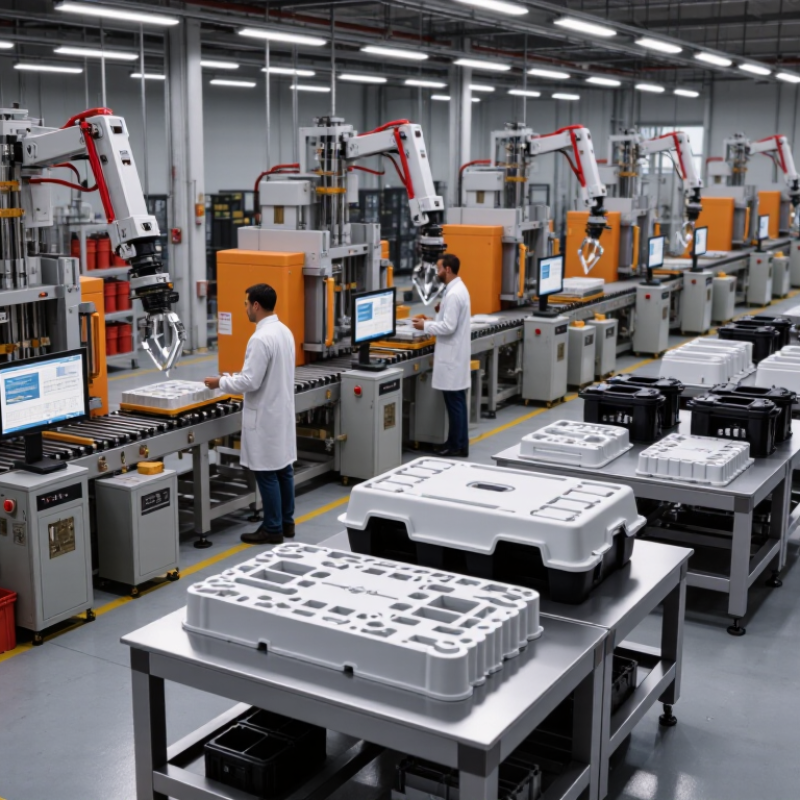
The seven leading automotive injection molding suppliers worldwide share one practical strength: they understand production beyond the mold. They support material selection, mold design, validation, and stable high-volume output. Their facilities commonly use automated presses, inline vision checks, and documented process controls. Some also operate near major vehicle assembly regions, reducing transport delays and communication gaps.

A reliable supplier should handle engineering plastics, reinforced polymers, and demanding surface finishes. It should provide dimensional reports, mold-flow analysis, and traceable batch records. Experienced teams inspect critical parts such as instrument panels, door modules, clips, and under-hood housings. They also test warpage, weld lines, impact resistance, and temperature performance. Small details matter here.

Capability varies between the seven leaders. One may excel at large structural components, while another specializes in micro parts or rapid tooling. Strong suppliers disclose cycle-time assumptions and realistic tooling limits. They do not promise perfection. No supplier is flawless. A missed tolerance or late design change can still disrupt production. The better companies respond with root-cause reviews, corrective actions, and measurable follow-up. Buyers should compare audit results, sample parts, maintenance records, and after-sales engineering support before approving a long-term program.

7 Best Automotive Injection Molding Suppliers Worldwide

Typical injection molding cycle times by automotive component category

The chart presents representative industrial cycle-time values for common automotive injection-molded components. Actual times vary according to resin type, part thickness, mold design, machine size, cooling efficiency, and automation level.

Comparing Technologies, Materials, and Production Capabilities

The seven strongest automotive injection molding suppliers differ in technology, materials, and production discipline. A reliable comparison should examine more than machine size or quoted price. It should review mold design support, process validation, traceability, and delivery performance. These details often decide whether a dashboard vent fits correctly after months of temperature changes.

Technology shapes both quality and cost. Advanced suppliers may use electric molding machines for repeatable control and lower energy use. Hybrid machines can provide higher clamping force for larger structural parts. Gas-assisted molding reduces weight in thick components, while insert molding combines plastic with metal hardware. Multi-shot molding can create soft-touch surfaces without secondary assembly. However, complex technology is not automatically better. It must match the part’s geometry and annual volume.

Material capability also separates experienced suppliers from basic job shops. Common options include polypropylene, ABS, polyamide, polycarbonate blends, and glass-filled engineering plastics. Each material affects shrinkage, impact strength, surface finish, and mold wear. Suppliers should document drying conditions, resin batches, and inspection results. Production capacity matters too. Look for automated handling, stable cycle times, backup equipment, and realistic ramp-up plans. A supplier may promise millions of parts, yet struggle during a sudden design change. That weakness deserves attention. Human review still matters, especially when warpage appears around ribs, clips, or thin walls. Even the best process can need adjustment.

How to Select the Right Supplier for Your Automotive Project

Selecting an automotive injection molding supplier starts with program risk, not a glossy factory tour. The IEA’s Global EV Outlook 2024 reports nearly 14 million electric cars sold in 2023. That shift increases demand for lightweight housings, connectors, battery components, and tight dimensional control.

Ask suppliers for evidence, not promises. Review mold-flow analysis, cavity balance, cycle-time records, scrap rates, and maintenance logs. A capable supplier should support APQP, PPAP, control plans, and traceability under IATF 16949 practices.

Check whether its presses can handle your resin, shot size, clamping force, and expected annual volume. Small mismatches become expensive quickly.

Quality systems matter, but real production behavior matters more. Request sample inspection reports from comparable automotive parts, including warpage, flash, and surface defects. Audit material storage, drying procedures, gauge calibration, and engineering-change controls. The U.S. Department of Energy continues to highlight vehicle weight reduction as an important efficiency strategy, so material selection deserves technical review. Recycled content may help, but it can also change shrinkage and appearance.

Do not select on unit price alone. Compare tooling life, changeover time, logistics resilience, warranty support, and total landed cost. Ask how the supplier handles a late design revision. The answer may expose weak communication. A second-source plan is sensible, even when the first supplier looks excellent. No audit is perfect. That is the uncomfortable part.