As vehicles become lighter, more connected, and increasingly electrified, plastic components play a practical role in modern automotive design. They appear in dashboards, door panels, air ducts, battery enclosures, and under-hood assemblies. Choosing among Automotive Plastic Injection Molding Companies involves more than comparing product photos or production claims. Material expertise, tooling capabilities, dimensional consistency, and dependable delivery all matter.
This guide to the top 10 companies offers a starting point for understanding the supplier landscape. It considers factors such as engineering support, mold design, production capacity, quality systems, and experience with automotive-grade materials. A well-equipped supplier may help refine a component’s wall thickness, reduce excess weight, or resolve fit issues before full-scale production. Small details matter. A clip that holds firmly, a clean molded surface, or a repeatable measurement can affect assembly work downstream.
Company rankings are not a substitute for a project-specific assessment, and supplier capabilities can change. That distinction matters. Buyers should confirm current certifications, relevant production examples, material traceability, and quality procedures directly with each candidate. Plant locations, lead times, and tooling ownership may also shape the decision. This overview is designed to help readers ask informed questions, not promise a perfect match. Even a strong supplier may not fit every program, budget, or production schedule.
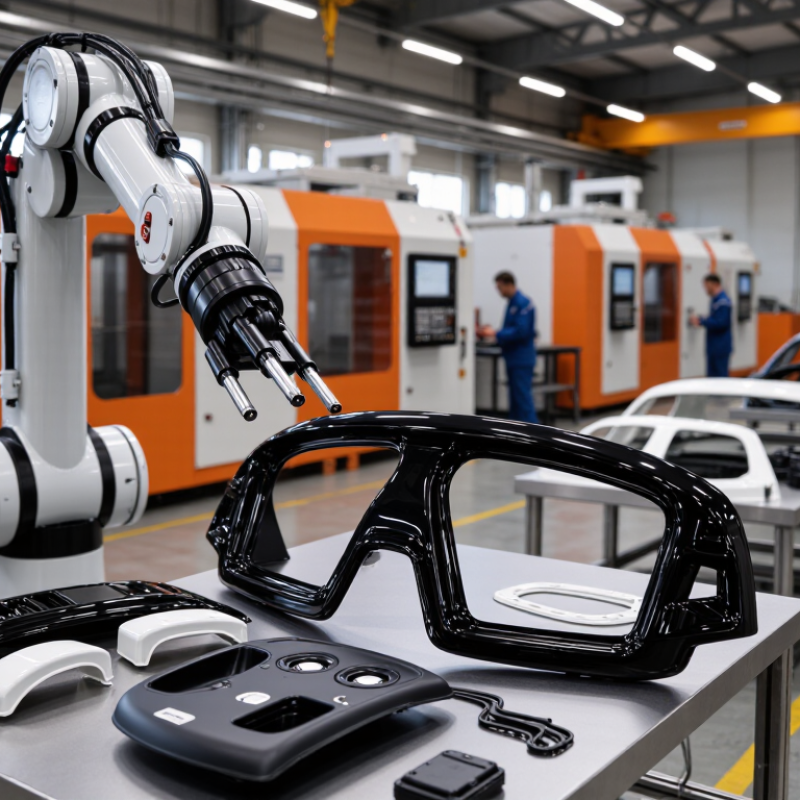
Automotive plastic injection molding turns carefully designed resin pellets into components used throughout a vehicle. These parts may include instrument panels, door trims, air ducts, clips, and protective covers. The process heats plastic, injects it into a shaped steel mold, and cools it until the part holds its form. Cycle after cycle, consistency matters.
Small design choices can affect fit and durability. A thin wall may reduce weight, but it can also cool unevenly or warp. Ribs can strengthen a panel without adding much material. Gate position, mold temperature, and resin selection influence surface finish and shrinkage. Even a tiny mismatch can leave a visible gap near a dashboard seam. Details matter.
Yet plastic is not automatically the best choice for every component. Heat, vibration, repeated contact, and exposure to cleaning products can change how a part performs over time. Engineers need to test molded components under realistic conditions, not just inspect a fresh sample. That takes time. Recycled content may also introduce variation, so material control deserves careful attention. A lighter part can help reduce vehicle mass, but only when its strength, fit, and service life meet the application’s needs.

A leading automotive molder should prove stable production, not just quote a low unit price. OICA reported 93.5 million motor vehicles produced worldwide in 2023, making repeatable quality at scale a practical selection criterion (OICA, 2023 production statistics). Ask for process-capability data on critical dimensions, scrap trends, and corrective actions. Evidence matters. Inspect how the supplier controls mold temperature, cavity pressure, and shot weight across shifts. Request sample inspection records, not only polished capability statements.
Material and engineering flexibility matter too. The IEA reported nearly 14 million electric cars sold in 2023, about 18% of global car sales (Global EV Outlook 2024). That shift increases the value of suppliers able to validate changing part designs, resin choices, and production volumes. Review test plans for dimensional stability, impact performance, and heat cycling. Check whether engineering teams can explain trade-offs in plain language. Not brochures.
Strong candidates also show traceability from resin batches to finished parts, practical maintenance routines, and clear escalation paths when defects appear. Ask to see how they contain a suspect batch and document the fix. Sustainability claims deserve the same scrutiny: request measured scrap, recycled-content, or energy data with defined boundaries. A tidy scorecard can miss real shop-floor habits, so include a plant review. One visit is not enough. Compare the evidence with customer-specific tolerances, delivery needs, and the complexity of the part.
How to use this chart: These standards offer evidence to check when assessing an automotive molding supplier’s quality, environmental, occupational health and safety, and energy-management systems. Edition years are shown; certification alone does not establish supplier performance or rank companies.
Sources: IATF 16949:2016; ISO 9001:2015; ISO 14001:2015; ISO 45001:2018; ISO 50001:2018.
The ten profiles reflect different strengths found among automotive plastic injection molding suppliers, rather than a single ranking. One company may focus on high-volume interior panels, where consistent texture and color matter. Another may specialize in compact clips and housings, with close attention to dimensional repeatability. A third may offer exterior trim molding, while a fourth supports lightweight structural components. These are different demands. A supplier experienced with large parts may not suit a small, tolerance-sensitive component.
Other profiles highlight insert molding for parts that combine plastic with metal, and tooling expertise that helps control parting lines and cycle times. A development-focused company may support early prototypes and design adjustments. Another may manage complex assemblies, reducing hand-fitting on the production floor. Multi-site manufacturers can offer capacity across regions, though coordination deserves careful checking. A supplier working with recycled resins may help assess material options, but performance still depends on the application. The details matter.
When comparing these ten types of companies, buyers should ask for relevant automotive project experience, inspection methods, and examples of process controls. Look for clear answers about mold maintenance, sample approval, and how defects are tracked. A polished capability sheet is useful, but not enough. Ask what happens when a part warps or a tool needs repair. Profiles can guide a shortlist; they cannot replace technical review. Some distinctions are less tidy than they appear.
Company names and brands are intentionally omitted. The profiles below describe common automotive molding specializations; they are not a ranking of specific companies.
| Profile | Typical product focus | Common material examples | Typical molding considerations | Common vehicle areas |
|---|---|---|---|---|
| Profile 1 Interior trim specialist |
Decorative trim, bezels, console parts and finish panels | ABS, PC/ABS and polypropylene (PP) | Surface texture, color consistency, fit and appearance requirements | Instrument panel, center console and door interior |
| Profile 2 Instrument-panel component specialist |
Structural carriers, air-vent components and instrument-panel details | PP, ABS and PC/ABS | Dimensional stability, complex geometry and integration with adjoining components | Dashboard and cockpit assembly |
| Profile 3 Exterior trim specialist |
Grilles, wheel-arch trim, mirror housings and exterior garnish | PP, ABS and PC/ABS, selected by part requirements | Weathering, impact performance, surface finish and dimensional control | Vehicle exterior |
| Profile 4 Lighting-component specialist |
Lamp lenses, reflectors and lighting housings | Polycarbonate (PC) for many lenses; other resins depend on component design | Optical quality, controlled surface defects and precise mold finishing | Headlamps, rear lamps and signal-light assemblies |
| Profile 5 Under-hood component specialist |
Covers, ducts, housings and fluid-system components | Heat-stabilized PA, PP and other application-selected engineering resins | Temperature, chemical exposure, pressure and service-life requirements | Engine compartment and thermal-management systems |
| Profile 6 Electrical and connector component specialist |
Connector housings, clips, sensor housings and electrical enclosures | PA, PBT and other materials selected for electrical and environmental needs | Dimensional precision, insulation properties and secure assembly features | Wiring systems, sensors and electronic modules |
| Profile 7 Fluid-system component specialist |
Reservoirs, connectors, valves and fluid-routing parts | PP, PA and other resins chosen for fluid compatibility and operating conditions | Leak prevention, chemical compatibility and pressure-related design needs | Cooling, washer, fuel and other vehicle fluid systems |
| Profile 8 Precision small-part specialist |
Clips, retainers, gears, fasteners and small mechanisms | PA, POM and other engineering thermoplastics, as appropriate to the design | Tight tolerances, repeatable dimensions and functional testing | Interior, body, seating and mechanical assemblies |
| Profile 9 Large-part molding specialist |
Large trim panels, storage components and molded carriers | PP and other thermoplastics selected for stiffness, weight and finish needs | Large-tool temperature control, warpage management and part handling | Door interiors, cargo areas and cabin assemblies |
| Profile 10 Multi-process integration specialist |
Molded components combined with inserts, seals or secondary finishes | Material depends on the part; common options include PP, ABS, PC/ABS and PA | Insert or overmolding compatibility, assembly sequence and quality control | Interior, exterior and functional assemblies |
Material choices and specifications vary by part design, vehicle requirements and applicable validation standards.
Comparing the top ten automotive plastic injection molding companies means looking beyond press size and production volume. Check whether each supplier supports part design, mold-flow analysis, tooling, and production validation. Ask for examples of managing thin walls, visible surfaces, and tight assembly tolerances. Small details matter. A capable team should explain how it controls defects such as sink marks, flash, and inconsistent color. Request process data, inspection records, and clear plans for corrective action. A ranking can still miss a poor fit for your part.
Material capability affects durability, weight, cost, and processing conditions. Common options include polypropylene, ABS, PC/ABS blends, and glass-filled nylon. Compare suppliers on their experience with the specific grade and its required performance, not just a broad material list. Global reach also varies. Regional plants can shorten delivery routes, while nearby tooling and engineering support can speed up revisions. Confirm which services are available at each site; a global footprint does not guarantee consistent support everywhere.
Tips: Share drawings, annual volumes, and operating conditions before requesting quotes. Ask how material substitutions are approved and how production changes are documented. Then compare lead times and quality evidence—not price alone. Be cautious when claims sound perfect; real production has trade-offs.
Electrification is changing what molded parts must do. The International Energy Agency’s Global EV Outlook 2024 reports nearly 14 million electric-car sales in 2023, about 18% of all car sales. More battery-powered vehicles mean greater demand for durable housings, cable guides, and components that manage heat and vibration. These parts need careful material selection, not simply thinner walls. A lighter design can help, but poor stiffness or fit creates new problems.
Weight reduction remains important for both electric and combustion vehicles. The U.S. Department of Energy reports that cutting vehicle weight by 10% can improve fuel economy by 6–8%. That figure is a useful benchmark, not a guarantee for every molded component. Engineers are using stronger polymers, ribbed geometries, and integrated features to reduce mass while maintaining performance. Small details matter: a warped clip or uneven wall can disrupt assembly.
Manufacturers are also facing pressure to use recycled materials and reduce production waste. Recycled resin can vary in color, strength, and flow, so testing each grade is essential. Process monitoring helps track temperature, pressure, and scrap rates. It is not a perfect fix. Tooling changes and material trials take time, and lighter parts do not automatically have a lower total footprint.