Leave Your Message

7 Best Automotive Interior Injection Molding Suppliers

Automotive interior components must look refined and perform reliably through years of everyday use. A dashboard trim panel, air vent, or center-console bezel may seem simple, but each part depends on thoughtful design and controlled production. Automotive Interior Injection Plastic Part Molding brings together material selection, tooling, process control, and finish quality. Small details matter. Uneven grain, visible sink marks, loose clips, or inconsistent color can undermine an otherwise well-made cabin.

Choosing a supplier involves more than comparing sample parts or quoted prices. Buyers should ask how a manufacturer handles design reviews, mold trials, dimensional checks, and production changes. It also helps to discuss resin options, surface textures, assembly requirements, and expected volumes before committing to a program. A polished sample is not the whole story. Ongoing consistency matters just as much. This distinction is easy to miss when schedules are tight.

The seven suppliers featured in this guide offer different capabilities for automotive interior molding projects. Their strengths may vary across engineering support, tooling experience, manufacturing capacity, and quality systems. No single provider is right for every part or production plan. Treat supplier claims as a starting point, then verify relevant experience and request evidence suited to your project. A clear comparison can help teams find a practical partner—and reveal questions worth asking before the mold is built.
7 Best Automotive Interior Injection Molding Suppliers

Automotive Interior Injection Molding: Products, Materials, and Processes

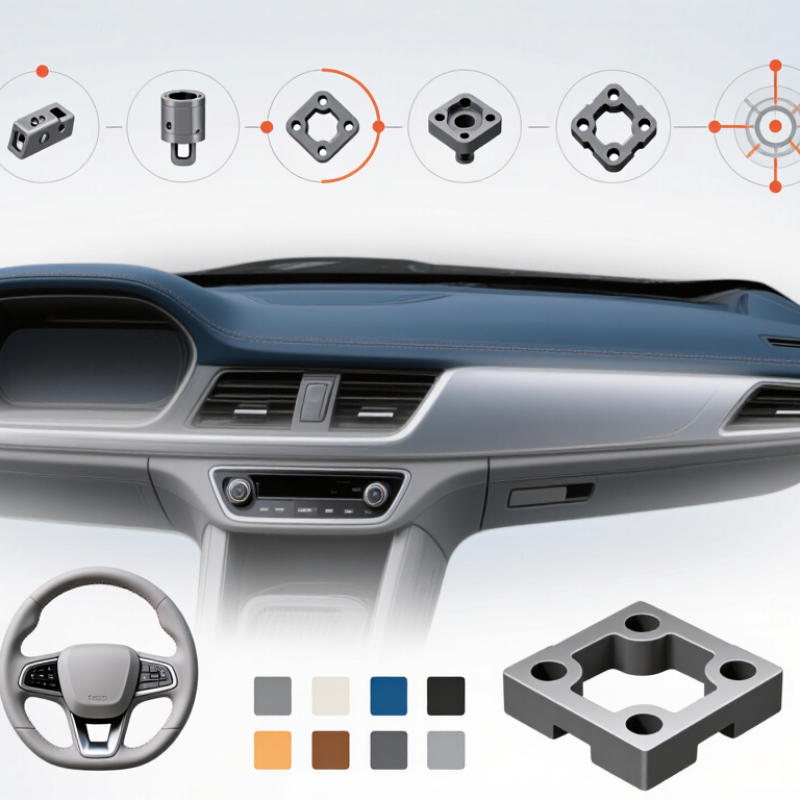
Automotive interior injection molding covers visible and functional parts, including dashboards, door panels, center consoles, air vents, and trim. Each part faces different demands. A console bezel needs crisp edges and a consistent grain, while a hidden clip must hold securely through repeated use. Small details matter. Suppliers should understand the part’s fit, appearance, and assembly role before finalizing a mold design.

Common material choices include polypropylene, ABS, and PC/ABS blends. Selection depends on stiffness, impact resistance, surface quality, heat exposure, and cost. A material that works well for a hidden bracket may not suit a sunlit dashboard. Process settings also matter: resin preparation, melt temperature, injection pressure, and cooling time can affect warpage, sink marks, and visible weld lines. Not every defect is obvious at first.

Experienced suppliers often review part geometry, gate locations, draft angles, and expected production volumes before tooling begins. Mold-flow analysis and prototype trials can reveal risks early, though neither guarantees a flawless part. Validation should include dimensional checks, surface inspection, and fit testing in the intended assembly. Color and texture need careful control across production runs. A technically sound component can still disappoint if its grain feels wrong or its gaps look uneven.
Key Factors for Evaluating Automotive Interior Molding Suppliers

Choosing an automotive interior molding supplier starts with the part itself. A dashboard bezel, door insert, and console panel each bring different demands for fit, texture, and durability. Ask which molding processes and materials suit the geometry, expected production volume, and surface finish. Specific answers matter more than broad claims.

Review dimensional controls, sample parts, and records from production trials. Small variations around clips or screw bosses can create gaps, rattles, or difficult assembly. Ask how the supplier measures critical features and handles changes to tooling. A polished sample can mislead. Request parts from a representative production run, then inspect them under consistent lighting and temperature. Fit matters.

Capability also depends on communication. Check whether engineering staff can discuss draft angles, wall thickness, and likely warpage before the tool is finalized. Clear feedback can prevent expensive revisions, though no supplier can remove every design compromise. That is worth remembering. Compare quoted costs alongside cycle time, inspection plans, tooling maintenance, and capacity for future volume changes. A low unit price may not reflect the full cost of interruptions or inconsistent parts. Ask for a realistic timeline, named quality contacts, and a practical response plan when defects appear. Their answers reveal how the relationship may work after approval.

7 Best Automotive Interior Injection Molding Suppliers - Key Factors for Evaluating Automotive Interior Molding Suppliers

Evaluation factor What to assess Evidence to request Strong-fit indicators
Automotive quality management Quality-system maturity, traceability, corrective action, and control of production changes. Current IATF 16949 or ISO 9001 certificate, certificate scope, audit results, and sample control plans. Certification and documented processes match the facility and operations proposed for the program. Confirm customer-specific requirements separately.
Interior-part and process experience Experience with comparable interior components, resin families, part sizes, surface finishes, and cosmetic requirements. Anonymized project examples, process capability summaries, defect-prevention methods, and references where disclosure is permitted. Demonstrated ability to manage the relevant appearance, fit, function, and production-volume requirements—not just general molding experience.
Engineering and design-for-manufacture support Early review of wall thickness, draft, ribs, bosses, gating, warpage risk, tolerances, and assembly interfaces. Design-review workflow, mold-flow analysis examples, tolerance studies, and documented issue-resolution records. Engineering recommendations are tied to part requirements and validated through trials, measurement, or simulation as appropriate.
Tooling, capacity, and maintenance Press range, available capacity, tool ownership and location, preventive maintenance, and contingency planning. Equipment list, capacity plan, tooling maintenance records, trial schedule, and backup or recovery plan. Equipment and tooling plans suit the part and forecast, with clear responsibilities for maintenance, repairs, and production continuity.
Validation and production launch Planning for trials, dimensional and functional checks, process approval, and launch readiness. APQP timing plan, measurement reports, sample-submission plan, process flow, and PPAP documentation examples. Launch deliverables and approval level are agreed with the customer; PPAP is prepared when required by the customer or program.
Material, regulatory, and change control Material sourcing, lot traceability, restricted-substance requirements, and control of resin or color changes. Material data sheets, supplier declarations, traceability records, and IMDS submission capability where applicable. Material approvals and reporting follow the program’s applicable requirements, with changes reviewed and authorized before implementation.
Commercial fit and supply-chain resilience Total delivered cost, lead time, communication, geographic logistics, and ability to respond to demand changes. Itemized quotation, lead-time assumptions, capacity commitments, escalation process, and business-continuity measures. Pricing assumptions are transparent, service expectations are measurable, and risks to material supply or delivery have practical mitigation plans.

Note: This is a supplier-evaluation scorecard, not a ranked list of named companies. Apply the criteria to the specific part, program, customer requirements, and production location.

Profiles of Seven Leading Automotive Interior Injection Molding Suppliers

7 Best Automotive Interior Injection Molding Suppliers

Profiles of Seven Leading Automotive Interior Injection Molding Suppliers

A tooling-led supplier stands out through mold accuracy and maintenance discipline. Look for clean parting lines, consistent clips, and records of tool changes. A materials-focused supplier handles varied resins and blends. Its value shows in stable color and feel across production runs. Small differences matter.

A surface-finishing specialist can deliver soft-touch textures, grain patterns, and low-gloss surfaces. Ask how finishes hold up after repeated cleaning and handling. A lightweighting supplier focuses on thinner walls and efficient structures, while protecting stiffness around fasteners. An integrated-module supplier combines molded parts with assembly work, reducing handoffs. That can help, though it also makes quality checks more complex.

A high-volume supplier is judged by cycle-time control, process monitoring, and its ability to contain defects before shipment. A collaborative engineering supplier joins early design reviews and flags difficult ribs, draft angles, or sink marks. Request samples and process evidence, not just a polished presentation. Supplier descriptions can sound similar; actual capability depends on the part, resin, tooling, and production conditions. A promising profile is only a starting point.

How to Compare Suppliers by Quality, Capacity, and Cost

Choosing an automotive interior injection molding supplier takes more than comparing quoted prices. Ask how each supplier controls resin drying, mold temperature, and cycle time. These details can affect grain appearance, fit, and squeak risk. Request sample parts from production tooling, not only polished display pieces. Inspect thin edges, clip features, gloss variation, and color consistency under ordinary cabin lighting. Small defects matter.

Quality claims should connect to records. Compare inspection plans, material traceability, dimensional checks, and documented corrective actions. Ask how the supplier handles a failed part during a production run. A clear answer is more useful than a wall of certificates. Capacity needs similar scrutiny: review machine tonnage, available shifts, tool maintenance, and backup plans for equipment downtime. Confirm the supplier can meet your forecast without relying on optimistic assumptions.

Cost comparisons should include tooling, material, scrap, packaging, freight, and engineering changes. A low unit price may hide long lead times or expensive mold revisions. Request a cost breakdown and compare the same part specifications and order volumes. Ask for recent delivery and defect trends, then verify them against sample records where possible. No scorecard removes judgment. A supplier may look strong on paper and still communicate poorly when a drawing changes. That deserves attention, even if the spreadsheet is tidy.

Selecting a Supplier for Your Vehicle Interior Project

Choosing an automotive interior injection molding supplier starts with the part, not the sales presentation. Share drawings, annual volume, resin requirements, surface expectations, and operating temperatures before comparing quotes. Ask how the supplier controls wall thickness, sink marks, weld lines, and color variation. These details matter on a dashboard or door trim, where sunlight can expose flaws quickly. Request evidence from comparable programs, including dimensional reports and samples made with production-intent tooling. A polished prototype is useful, but it is not proof of stable production.

The U.S. Department of Energy’s Vehicle Technologies Office reports that a 10% reduction in vehicle weight can improve fuel economy by 6–8%. That figure applies to the vehicle overall; it does not mean a lighter molded part alone will deliver the same gain. Still, it makes material selection worth discussing with the supplier. Compare recycled-content options, part strength, and processing consistency, then ask for test data rather than broad claims. Review tool ownership, maintenance plans, capacity, and change-control procedures as well. Who checks a mold after a long production run? Ask directly. I would also examine the handoff between design and tooling teams; it is easy to underestimate, and that is where avoidable rework can begin. A supplier’s answer should be specific, documented, and open to challenge.

Typical Density of Automotive Interior Injection-Molding Plastics

Representative density values for commonly used, unfilled thermoplastics. Actual values vary by grade and formulation.

Density is one factor to consider when selecting an interior material; appearance, impact performance, heat resistance, processability, and project requirements also matter.