Top Automotive Interior Injection Molding Manufacturers?
Choosing a supplier for automotive cabin components is not just a price comparison. A molded door panel must fit around clips, wiring, and soft-touch surfaces, often with little room for error. The same is true of consoles, bezels, and instrument-panel parts. Automotive Interior Injection Plastic Part Molding brings material selection, tool design, and process control together. A small change in resin shrinkage can leave a visible gap at a panel seam. A poor surface match can stand out under dealership lighting.
Plastics-processing professor Tim A. Osswald is a useful expert reference for this topic. The following is a paraphrase of his processing-focused perspective, not a verbatim quotation: “Good molded parts depend on matching material behavior with process control.” That principle helps frame a practical comparison of manufacturers. Look for evidence of tooling validation, dimensional checks, stable production, and experience with the textures and finishes your design requires. Ask how suppliers manage weld lines, warpage, and color consistency—not only how quickly they can quote a mold. Details matter.
This outline considers manufacturer capabilities, evaluation criteria, and questions worth asking before a project moves forward. It does not assume that one supplier suits every program. A technically strong company may still be a poor fit for a part with unusual appearance requirements or tight launch timing. And a polished sample is not proof of reliable production. That deserves a second look.
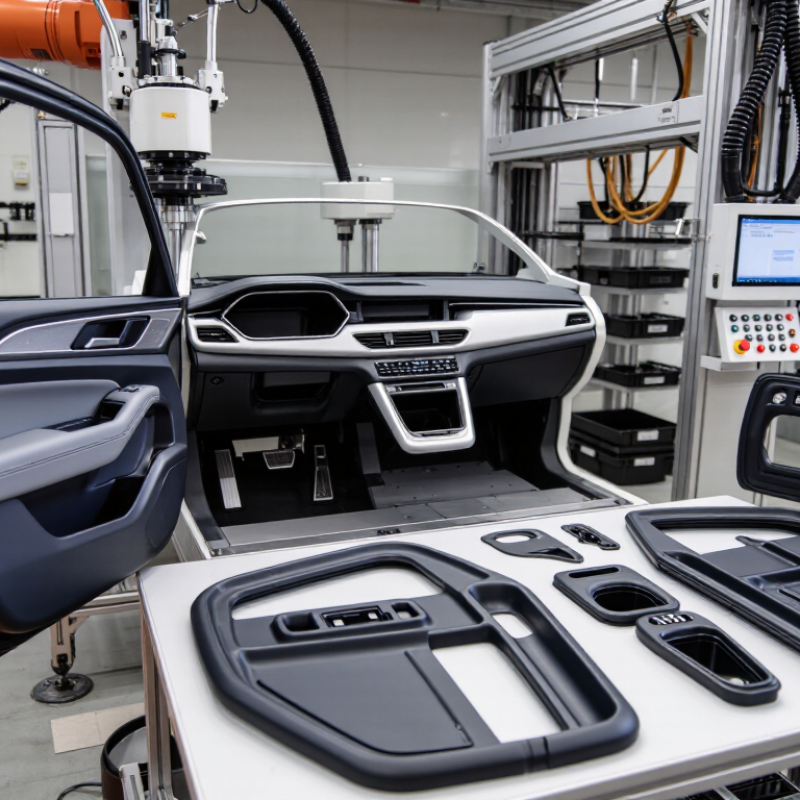
Automotive Interior Injection Molding: Scope and Core Components
Automotive interior injection molding covers producing cabin parts by forcing heated polymer into precision steel or aluminum tools. The scope ranges from visible trim to hidden supports. Common components include instrument-panel skins and carriers, door panels, center consoles, air vents, cup holders, and seat-belt guides. Small parts matter. A loose clip can create a rattle that drivers notice on rough pavement.
Material choice depends on impact needs, surface finish, temperature, and weight targets. Engineers may specify polypropylene for durable trim, ABS for detailed surfaces, or reinforced grades for structural supports. Mold design controls wall thickness, ribs, draft angles, gate position, and cooling channels. These details affect shrinkage, weld lines, cycle time, and fit across neighboring parts. A grain texture can hide minor flow marks, but it cannot fix poor dimensional control.
The process also includes color matching, decoration, assembly, and inspection. A console may need molded-in clips, a soft-touch coating, or openings aligned with wiring and switches. Tool trials should check gaps under changing cabin temperatures, not just on a clean bench. That is where assumptions get tested. In practice, a perfect first sample is uncommon, and even a small adjustment can shift another feature. Production teams track part variation, surface defects, and assembly force throughout each run.
Automotive Interior Injection Molding: Scope and Core Components
Representative density of common unfilled thermoplastics used in molded interior components
These materials are used in components such as trim panels, bezels, consoles, vents, and small mechanisms. Values are representative resin densities; exact figures vary by grade and formulation.
How Injection Molding Shapes Interior Parts
Automotive interior injection molding shapes the parts drivers touch every day: dashboards, door panels, console surrounds, vents, and small control bezels. Heated plastic pellets fill a precision-cut mold, then cool into a repeatable form. The process supports complex curves and integrated clips without assembling many separate pieces. Small details matter. A grainy surface can reduce glare, while a smooth edge feels better under a fingertip.
Mold design affects more than appearance. Gate placement, wall thickness, and cooling paths influence sink marks, warping, and cycle time. Engineers may use ribs to stiffen a panel without making it unnecessarily heavy. Material choice also matters: heat, sunlight, cleaning agents, and repeated contact can change how a part performs. Testing under realistic cabin conditions helps reveal weaknesses that a quick visual check might miss. It is not magic.
A capable manufacturer should explain how it controls process variation, checks dimensions, and handles design changes. Sample parts can expose issues early, such as a clip that feels too tight or a seam that catches light. Yet no single mold setting solves every trade-off; appearance, strength, cost, and production speed can pull in different directions. Some compromises deserve another review before tooling is finalized.
Types of Automotive Interior Molding Manufacturers
Automotive interior molding manufacturers generally fit into three groups: integrated module suppliers, component specialists, and tooling-led custom molders. Integrated suppliers mold and assemble larger systems, such as door panels or instrument-panel sections. They can coordinate part interfaces, trim, and assembly under one program. Their broader scope can simplify communication, though buyers should confirm who owns each engineering decision.
Component specialists focus on parts such as air vents, bezels, console panels, and small clips. They often build expertise in surface texture, tight fit, and repeatable high-volume production. Small parts matter. Tooling-led custom molders develop molds and molding processes for particular designs. They may suit complex geometries or limited production runs, but available capacity can vary. The categories are not perfectly clean; some manufacturers combine these roles.
When comparing manufacturers, look beyond a polished sample. Ask how they control resin batches, mold temperature, dimensions, and visible surface defects. Request relevant inspection records and clarify how design changes are handled. Even a capable production line may need adjustment after a texture or material change. That detail is worth discussing early. Match the manufacturer’s equipment, engineering support, and production capacity to the part’s actual requirements.
Key Technologies and Quality Standards
Top Automotive Interior Injection Molding Manufacturers?
Key Technologies and Quality Standards
Interior injection molding depends on more than a polished surface. Manufacturers use scientific molding to control melt temperature, injection speed, pressure, and cooling time. Sensors can track cavity pressure during each shot, helping teams spot short fills or warpage before parts reach assembly. DOE’s Vehicle Technologies Office reports that a 10% reduction in vehicle weight can improve fuel economy by 6–8%. That figure applies to vehicle mass overall, not to a single molded component, but it explains the value of lightweight design.
Quality systems turn process settings into repeatable results. IATF 16949:2016 establishes automotive quality-management requirements, while AIAG’s CQI-23 assessment focuses on molding processes. ISO 20457 provides dimensional tolerances and acceptance conditions for molded plastic parts. In practice, teams may inspect critical clip dimensions, color consistency, gloss, and resistance to heat or cleaning chemicals. A glossy sample can still conceal weak snaps or internal stress. It is worth checking function after aging tests, not just at initial approval.
Tips: Ask for documented process capability on critical dimensions, material traceability, and results from heat-aging tests. Review actual production parts, not only a showroom sample. Small details matter. Even experienced teams can miss a tool change that shifts fit, so periodic audits remain useful.
How to Evaluate and Compare Manufacturers
When comparing automotive interior injection molding manufacturers, look beyond the quoted piece price.
Ask how they control resin drying, melt temperature, and cycle time, since these can affect surface finish and part dimensions. Request samples of door-trim panels, vent bezels, or console components made with similar materials. Inspect grain consistency, clip fit, visible flow marks, and warpage under ordinary lighting. Small details matter.
Review how each supplier manages tooling changes and production quality.
Ask for examples of inspection records, dimensional reports, and corrective actions for past defects. Check whether the team can explain its measurement methods and trace material lots through production. A factory visit can reveal practical details: mold storage, maintenance logs, clean work areas, and how operators respond to a machine alarm. A polished presentation is not enough.
Compare capacity, lead times, engineering support, and communication alongside cost.
Ask who reviews part drawings, how design changes are documented, and what happens when a trial run misses tolerance. No scorecard is perfect. A spreadsheet helps, but it can hide awkward handoffs between design and tooling. Note any unclear answers, then ask for evidence rather than promises. Past performance is useful, though one successful sample cannot prove stable production across every shift.